The Hormuz refined fuel crisis is no longer affecting only crude oil markets. Increasingly, pressure is emerging across jet fuel, diesel and gasoline systems that support aviation, logistics and global mobility.
Recent market conditions suggest refined fuel disruptions may transmit economic pressure faster than crude-price volatility. Aviation routes, transport systems and supply-chain costs are already beginning to reflect that shift.
A New Energy Signal
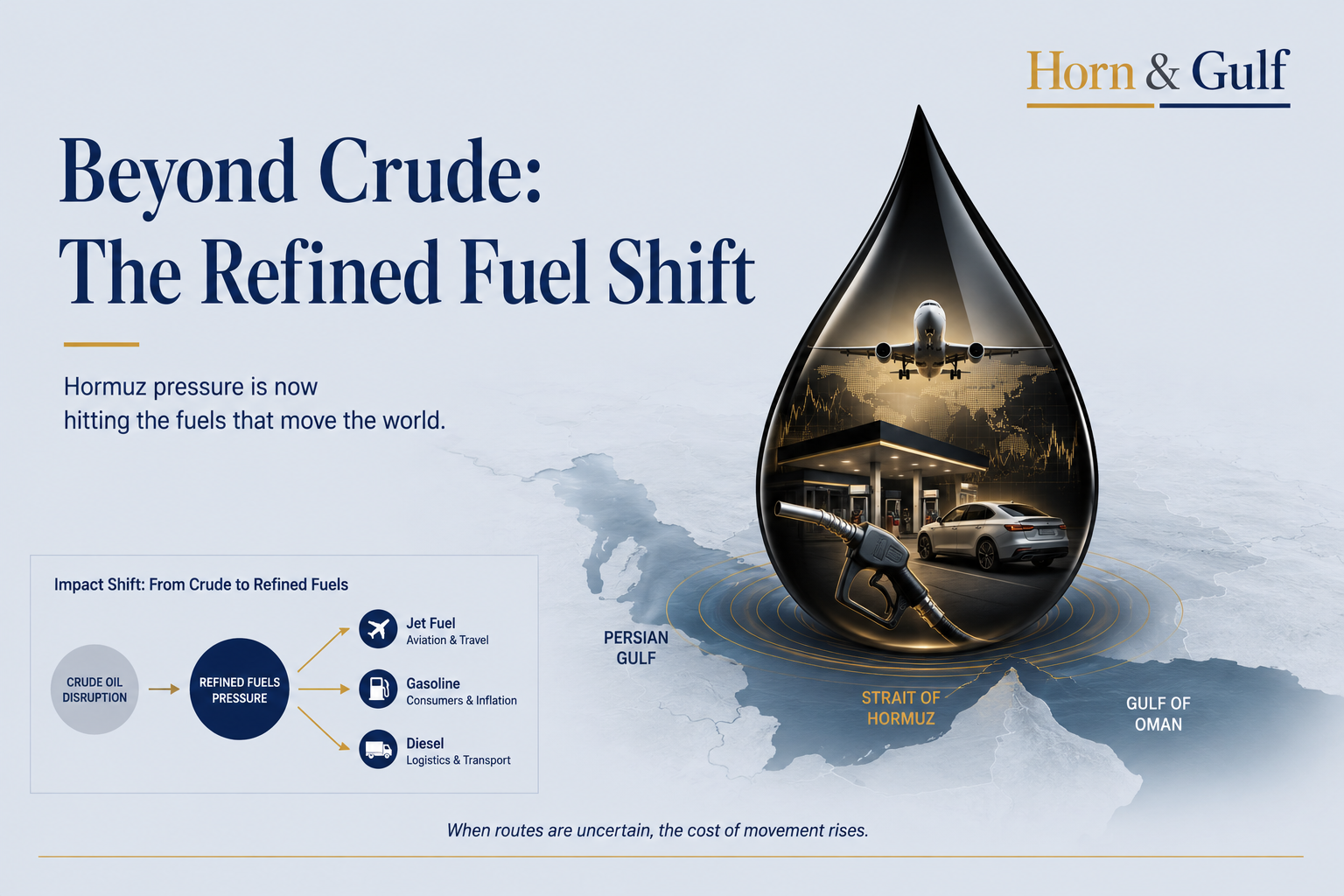
The Strait of Hormuz is no longer shaping only crude oil prices. It is now putting pressure on refined fuels such as diesel, gasoline and jet fuel.
That shift matters. The global economy does not run on crude oil directly. Aircraft need jet fuel. Trucks, ports and logistics networks need diesel. Households and businesses depend on gasoline.
So when refined fuels become more expensive or harder to move, the effect reaches the real economy quickly.
Why Jet Fuel Matters
Jet fuel has become one of the clearest signs of pressure.
Before the latest disruption, large volumes of Gulf-linked aviation fuel moved through regional maritime routes toward Europe and Asia. Since then, some flows have become longer, costlier and less predictable.
This does not mean the world is running out of jet fuel. The issue is more practical. Fuel is still available, but moving it has become more complex.
Shipping costs, insurance premiums, route changes and security concerns all affect the final price.
Airlines Face More Than Fuel Costs
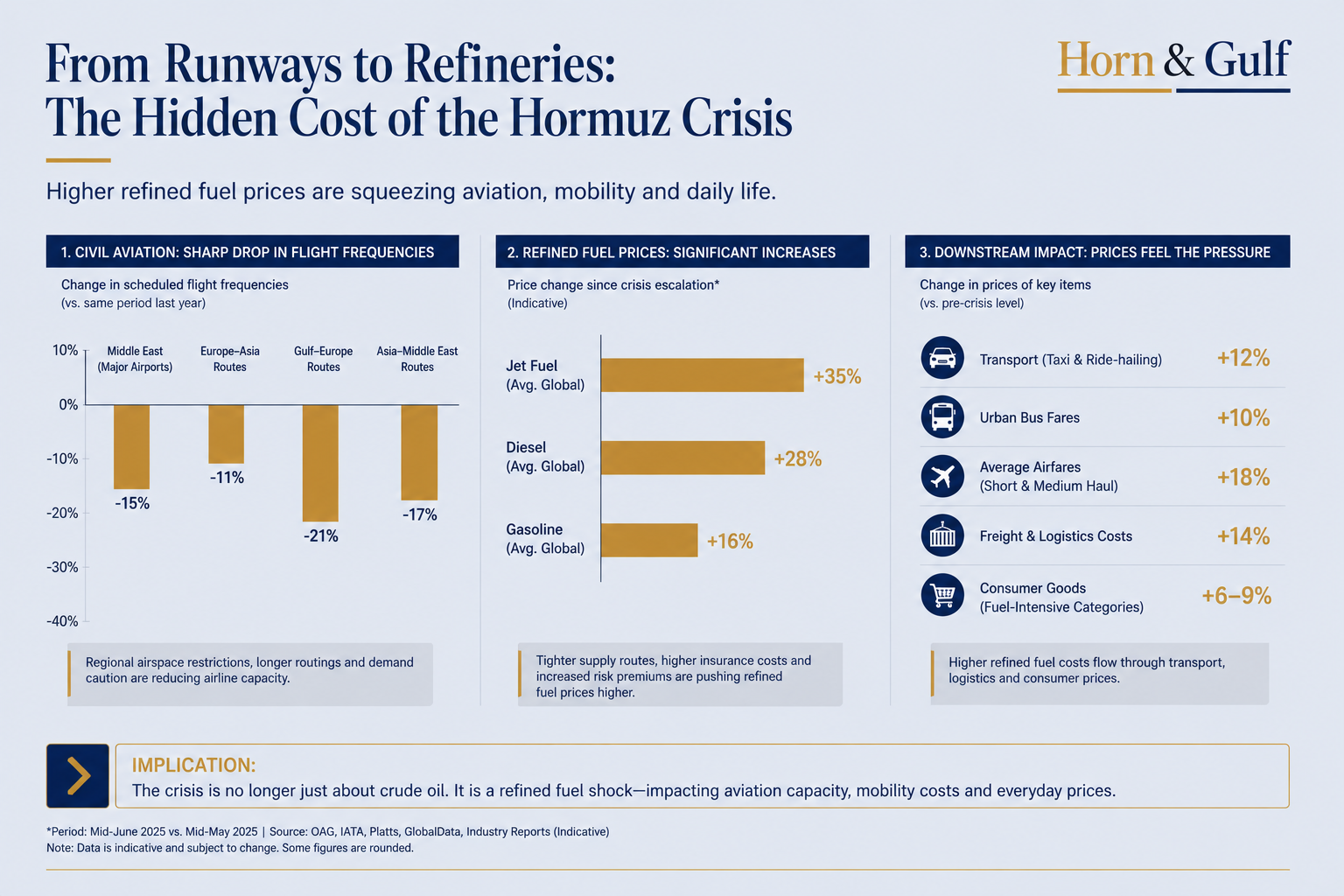
Several international airlines have extended suspensions or reduced flights across parts of the Gulf. Some Dubai-linked routes have also been affected.
Airlines mainly cite airspace security and regional uncertainty. At this stage, fuel prices alone do not explain these decisions.
Still, fuel costs matter in the background.
Long-haul flights are expensive to operate. When fuel prices rise, route economics become more fragile. If airlines also face longer routes, insurance concerns and uncertain demand, they become more cautious.
In this sense, fuel is not the main trigger. It is a commercial amplifier.
The Downstream Economy Is Exposed
Earlier Gulf crises mostly focused attention on crude oil exports. The current pressure shows a different risk.
Refined fuel distribution may now be the more sensitive layer.
Diesel affects trucking, ports and inland trade. Gasoline affects consumers and inflation expectations. Jet fuel affects aviation, tourism and global mobility.
This means maritime disruption does not stay inside the energy market. It can move into transport, logistics and travel.
Why This Matters for Dubai
Dubai is especially exposed to confidence in mobility.
Its economy depends on aviation, tourism, logistics and international access. The issue is not only whether fuel is available. The issue is whether people and companies trust that movement will remain smooth.
That confidence matters to airlines, insurers, traders and regulators.
Markets can remain supplied and still feel stress. Pressure may appear through slower flows, higher premiums, fewer route options and more cautious business decisions.
The Risk May Still Ease
The current pressure may not last.
Refiners can adapt. Alternative routes may stabilize. Strategic reserves can soften volatility. Airlines may restore capacity if security conditions improve.
Markets often react strongly during the early phase of a geopolitical crisis. If insurance costs fall and routes normalize, part of the refined-fuel premium could unwind.
So the argument should remain careful. Hormuz is not necessarily creating a permanent shock to aviation or fuel markets.
The Strategic Meaning
The stronger point is narrower but important.
Hormuz is now influencing the downstream fuel economy, not only crude oil exports.
If disruption continues, governments and companies will likely invest more in refinery resilience, strategic storage, alternative sourcing and route diversification.
For Gulf economies, this matters because aviation, logistics and tourism now sit beside hydrocarbons as core economic pillars.
For Dubai, the issue is confidence in uninterrupted mobility.
The question is no longer only whether oil can leave the Gulf. It is whether the wider transport system around the Gulf can keep operating with the predictability global markets expect.
For now, the clearest signal is this: Hormuz-related disruption is starting to affect the refined fuel economy that supports aviation, logistics and global mobility.