Signal Over Noise
Horn and Gulf was built on a simple premise: to move beyond headlines, and uncover the structural logic connecting events across the Red Sea, the Horn of Africa and the Gulf.
Latest Releases
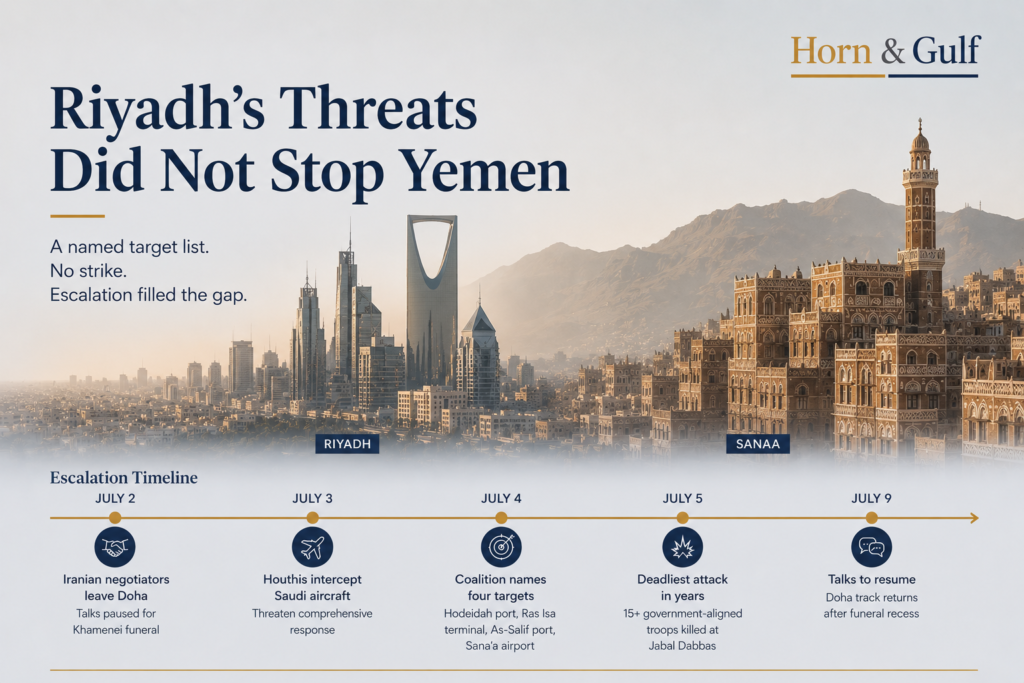
Riyadh’s Retaliation List Bought No Pause in Yemen
Saudi retaliation in Yemen entered a new phase after the coalition publicly identified four strategic targets but did not immediately follow with military action.
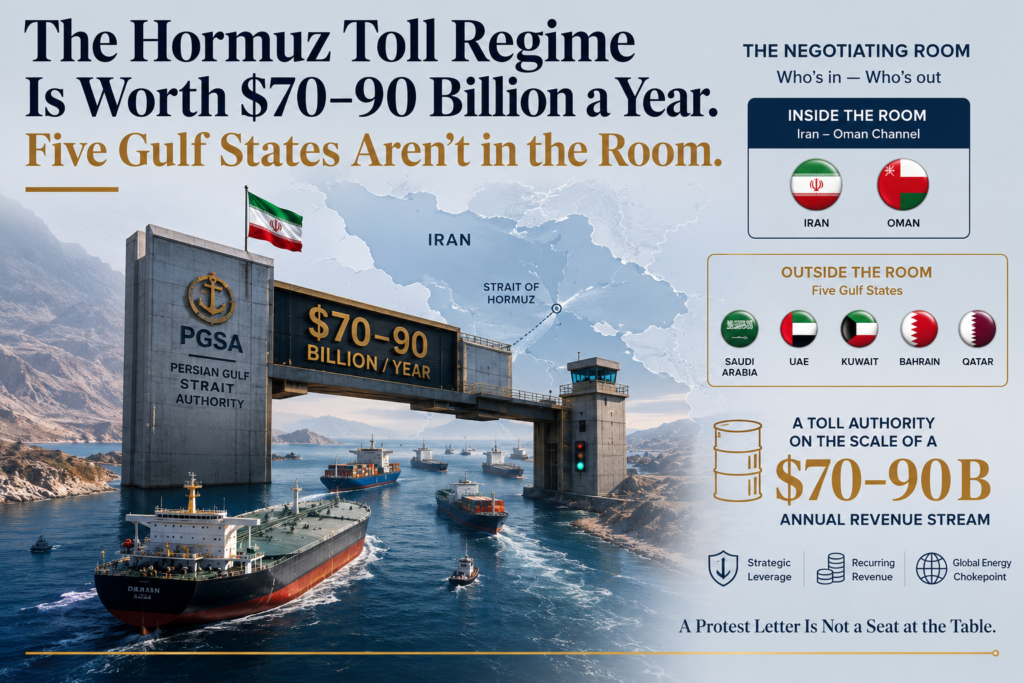
The Hormuz Toll Regime Is Worth $70–90 Billion a Year. Five Gulf States Aren’t in the Room
J.P. Morgan estimates that Iran’s Persian Gulf Strait Authority could generate $70–90 billion a year, if its toll structure survives the current negotiating window.
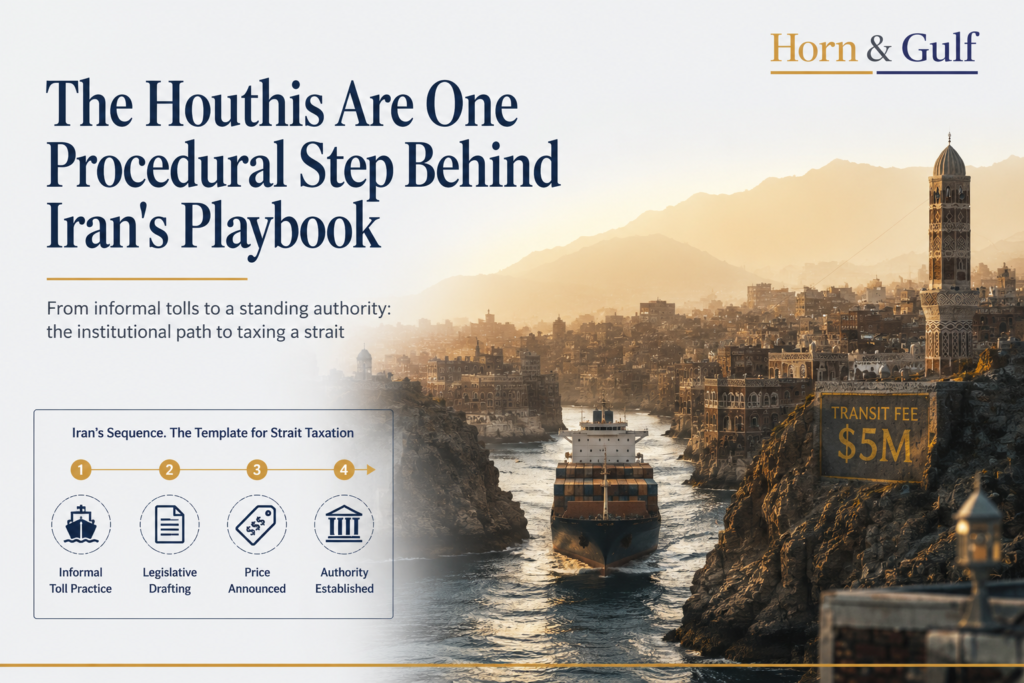
The Houthis Are One Procedural Step Behind Iran’s Playbook for Taxing a Strait
Most Red Sea risk coverage still treats a Houthi toll on Bab el-Mandeb as a conditional threat. Analysts write that the Houthis could impose fees, might formalize a toll mechanism, or are considering charging for passage. That framing is out of date.
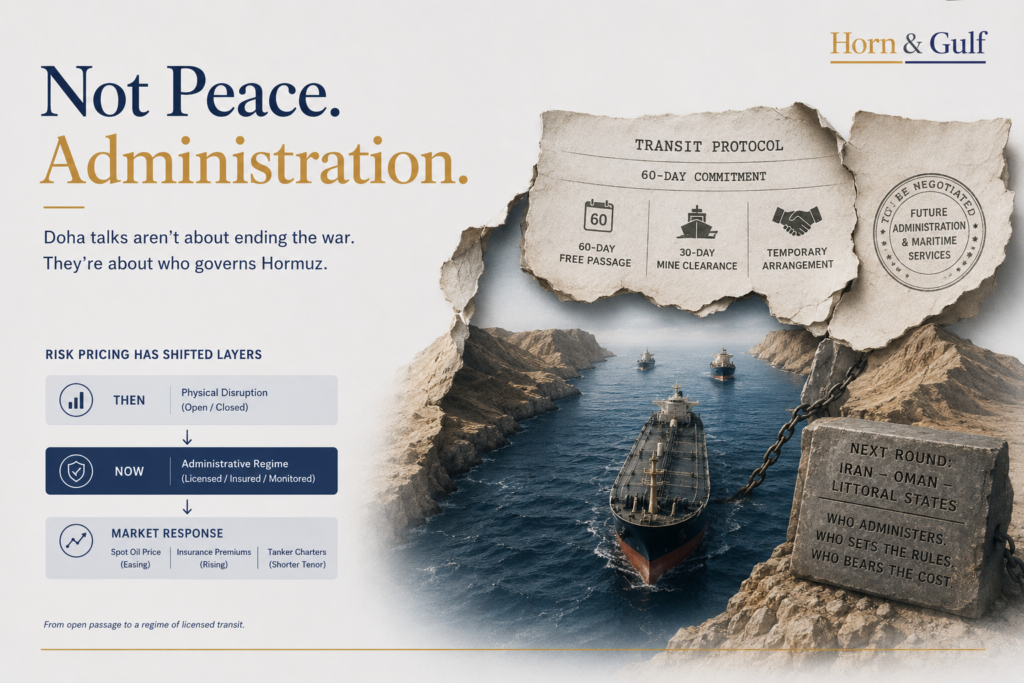
Doha’s Real Agenda Isn’t Peace — It’s Who Governs Hormuz
Coverage of the Doha contacts reads like a peace process: a US delegation on the ground, an Iranian delegation on the ground, Qatar mediating between them. That frame is not wrong, but it is incomplete.
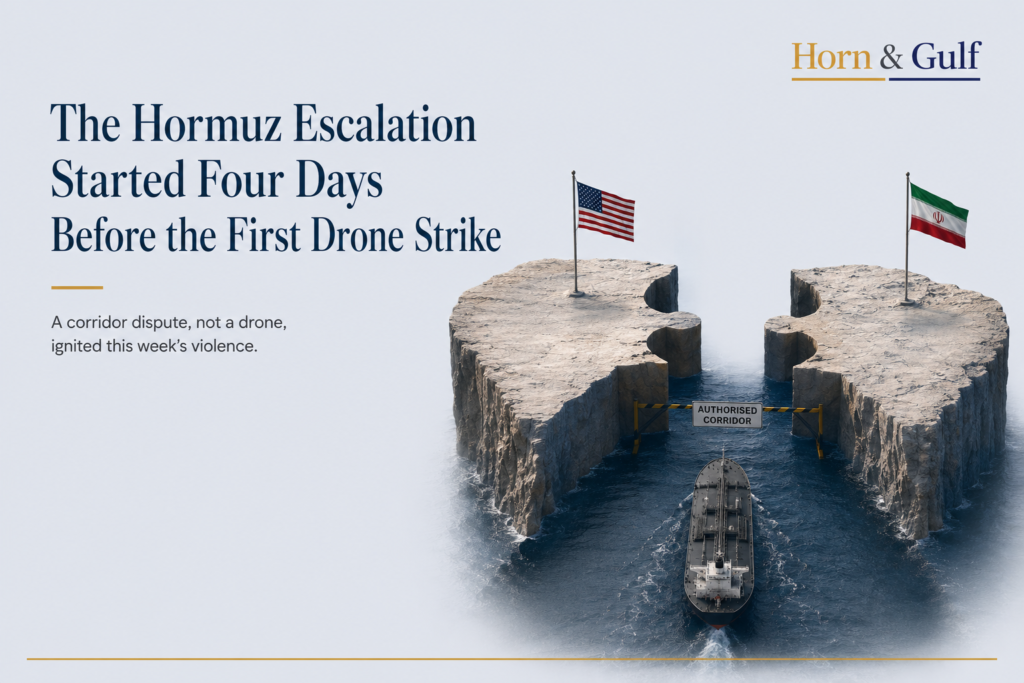
The Hormuz Escalation Started Four Days Before the First Drone Strike
Tehran has used limited coercion as a negotiating instrument before; this is not new. But something specific changed on the day before the Ever Lovely was struck and almost no analysis has caught it. That is where this piece begins.
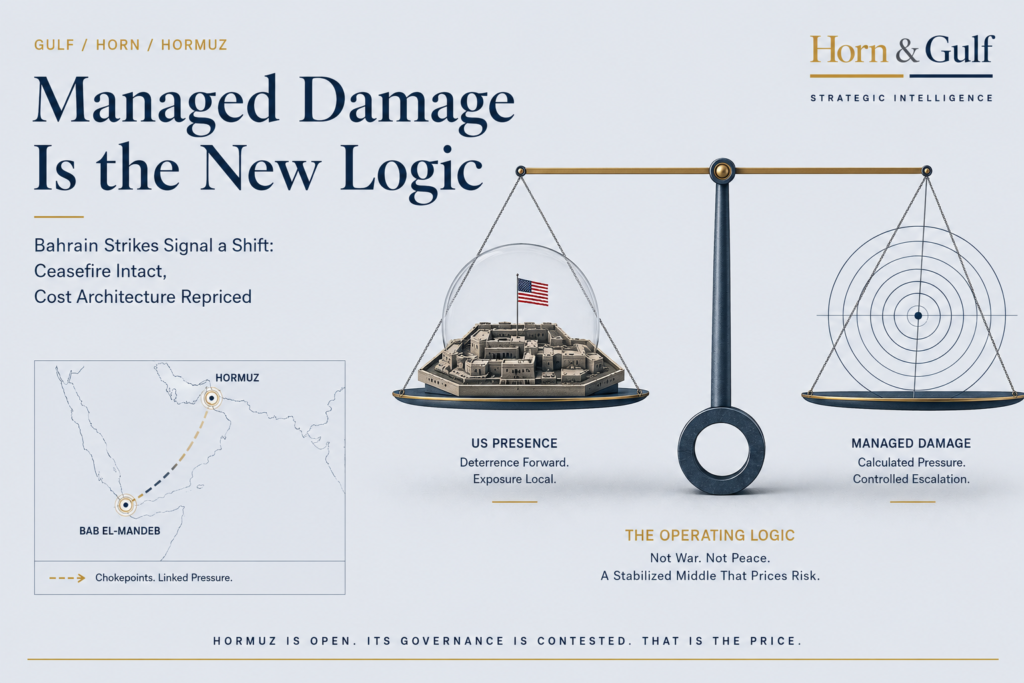
The Bahrain Strikes Are Not the End of the Ceasefire. They Are Its New Operating Logic
Recent attacks and the subsequent resumption of technical talks suggest that limited military pressure and continued negotiations are increasingly operating in parallel, creating a new framework for pricing geopolitical risk across Hormuz
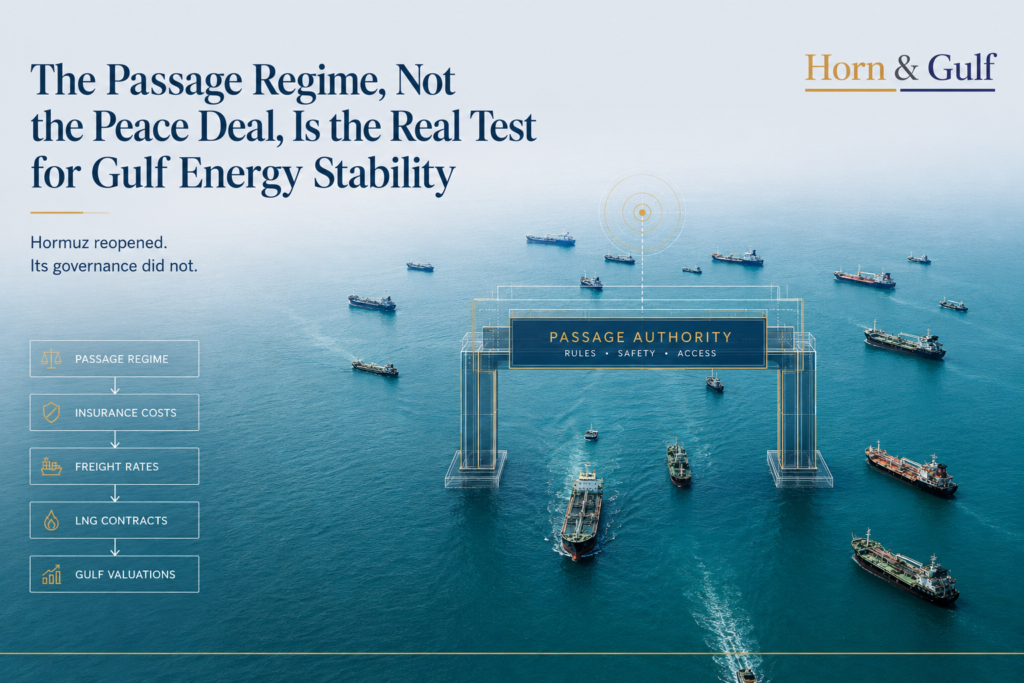
The Passage Regime, Not the Peace Deal, Is the Real Test for Gulf Energy Stability
The Islamabad MoU ended the shooting war. It did not settle the question that determines whether Gulf energy markets normalise or fragment.
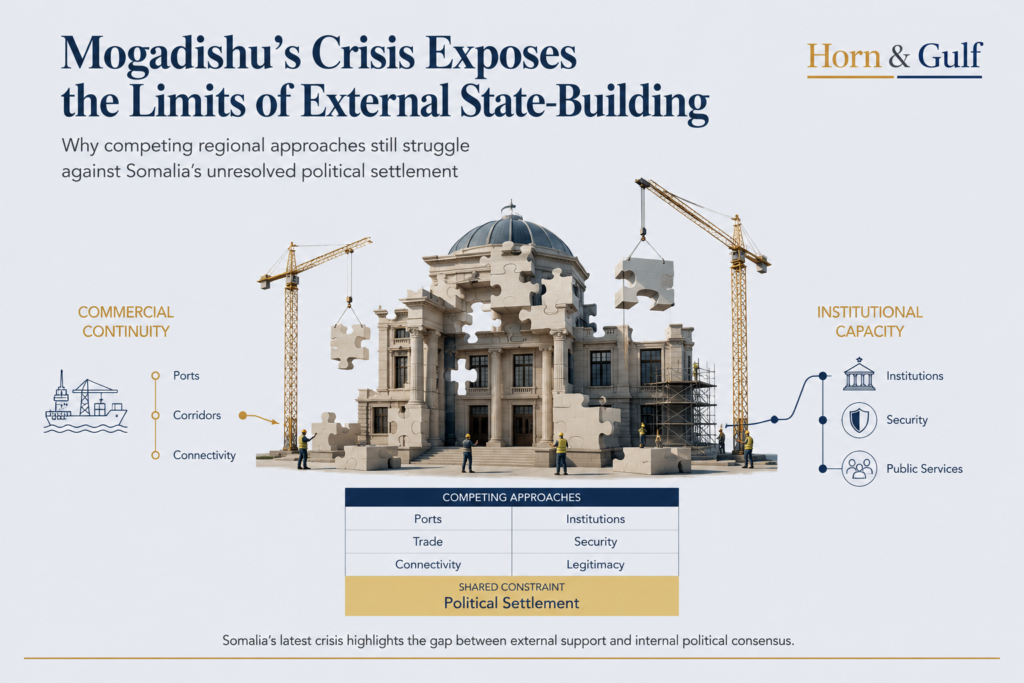
Somalia’s Mogadishu Crisis Tests Competing Approaches to State-Building
The latest violence in Mogadishu is not only a Somali security story. It is also an opportunity to reassess how different external actors have approached Somalia over the past decade — and where those approaches may be encountering their limits.
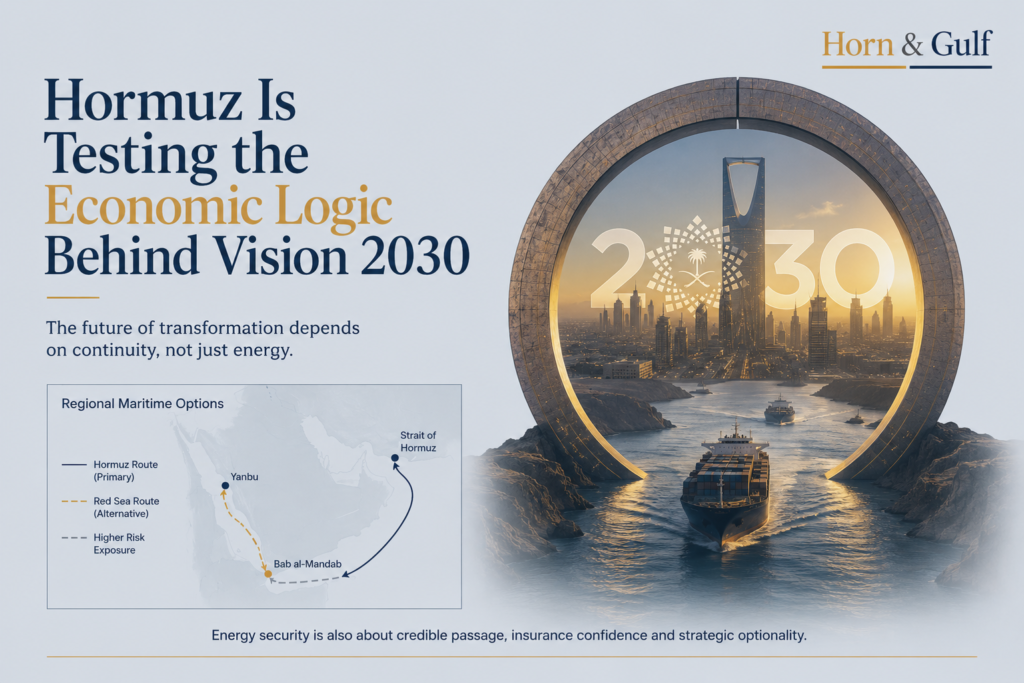
Saudi De-Escalation Was Never Only Diplomacy
Saudi Vision 2030 is increasingly tied to maritime continuity rather than oil prices alone. KSA’s challenge in the Iran war is not fundamentally about battlefield exposure. It is about continuity.
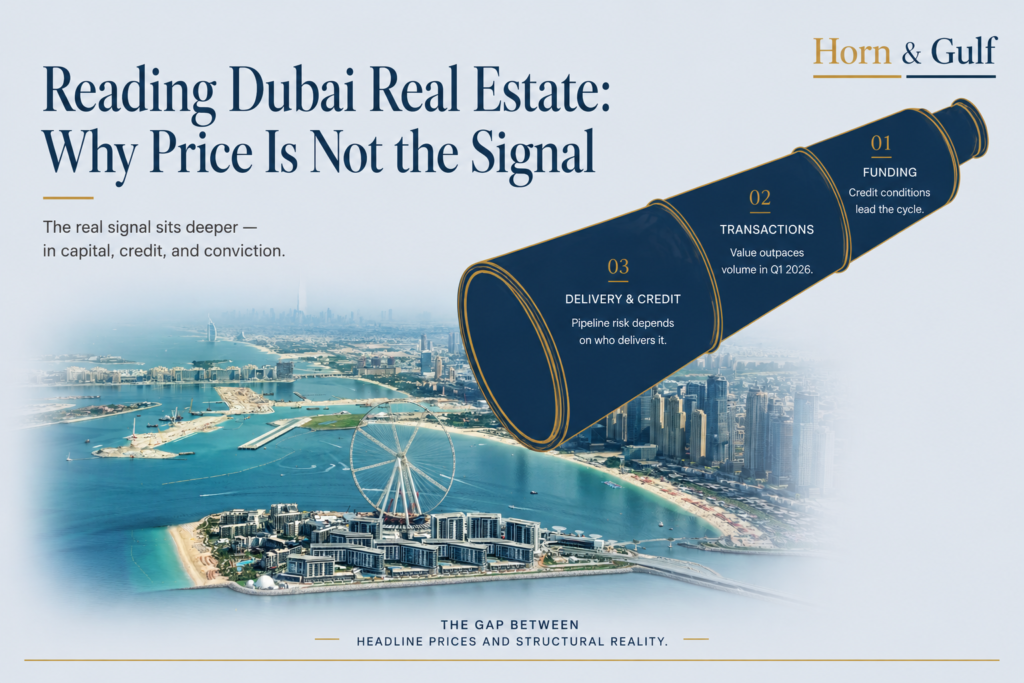
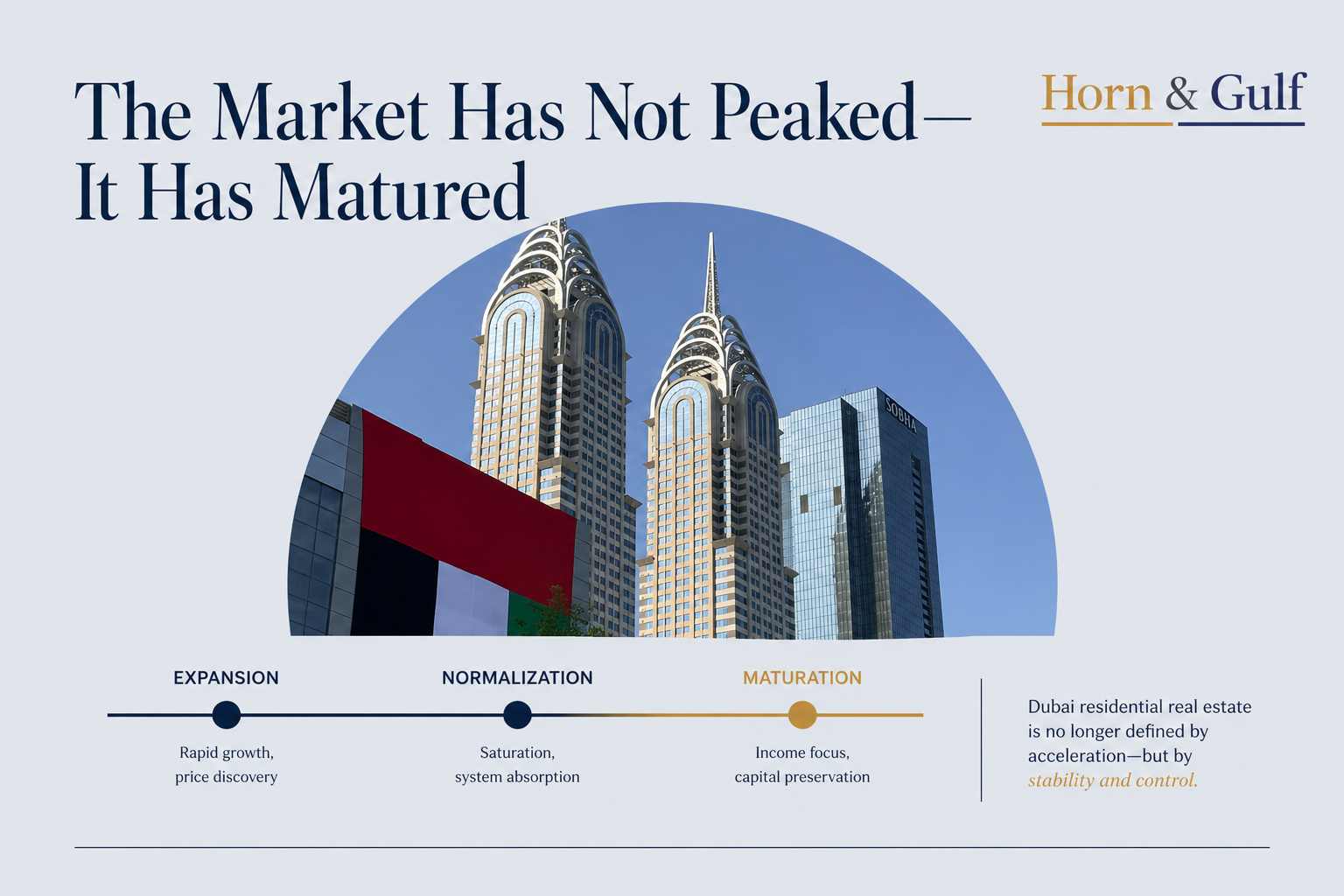
Reading Dubai Real Estate: Why Price Is Not the Signal
Dubai’s property market signal increasingly lies in funding conditions rather than listing prices.
Featured Analysis
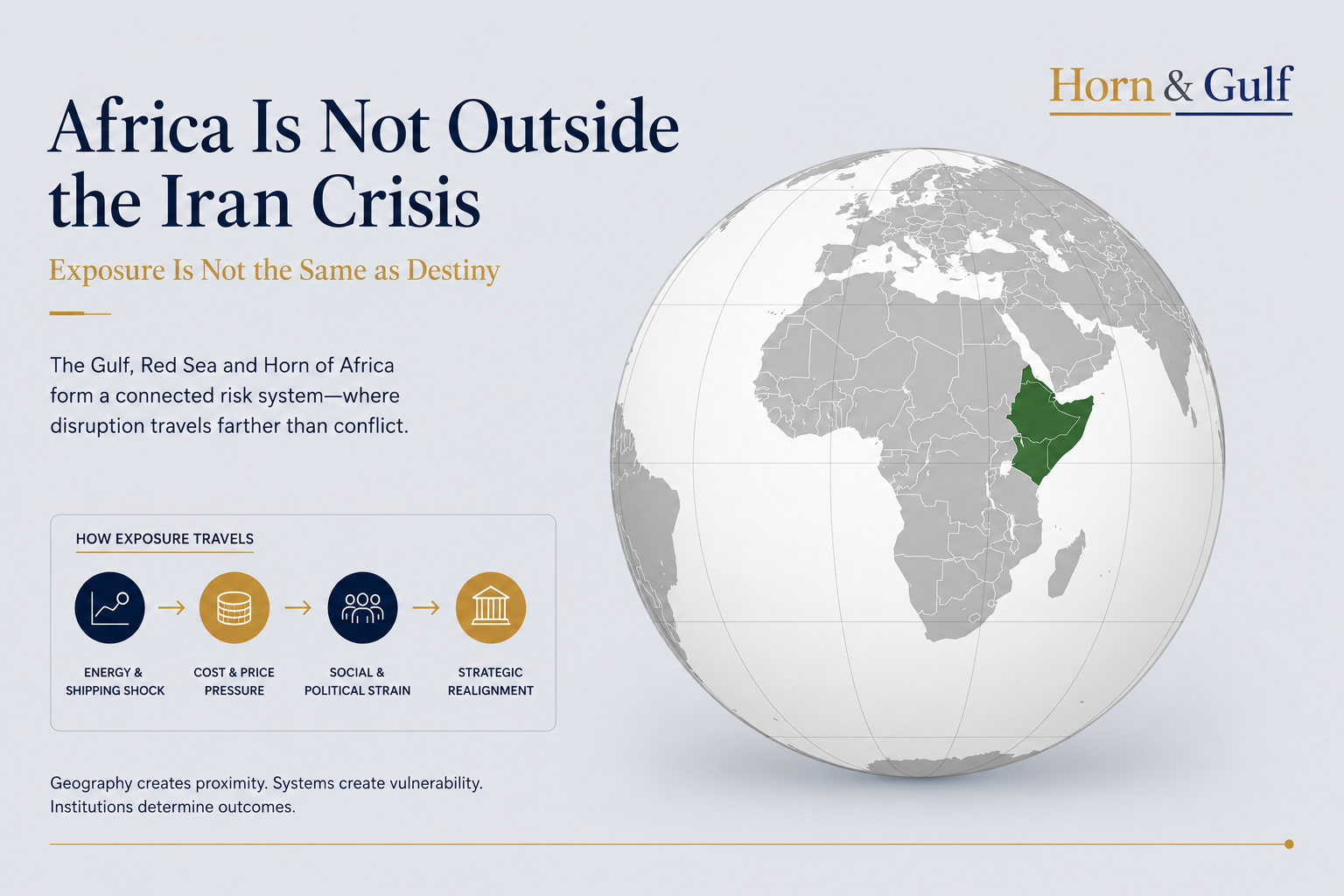
Africa Is Not Outside the Iran Crisis But Exposure Is Not the Same as Destiny
Gulf Energy Security Is Shifting From Production Capacity to Deliverability
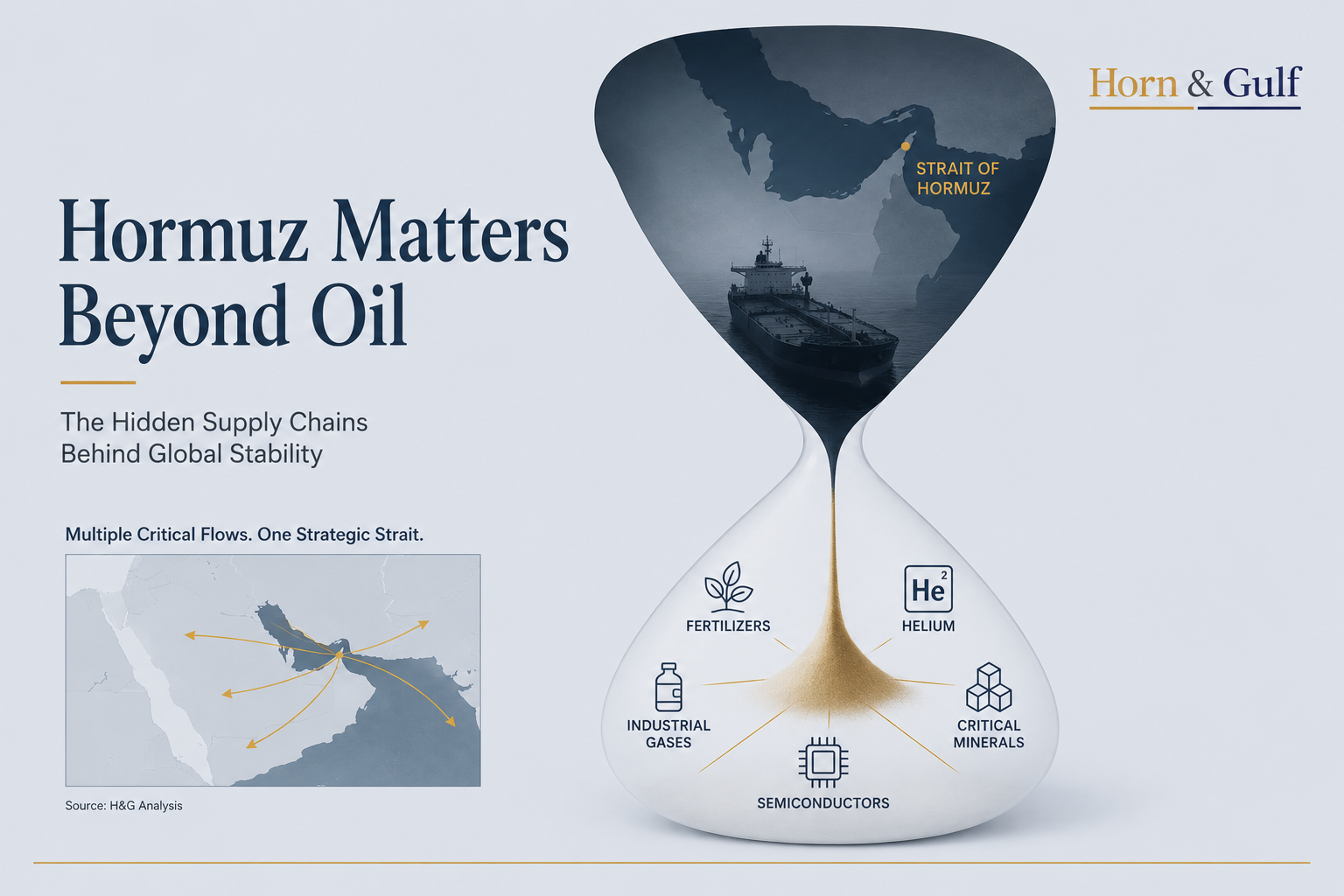
Hormuz Tensions Expose Supply Risks Beyond Oil and LNG
Ethiopia’s Budget Has a Gulf Crisis Line Item
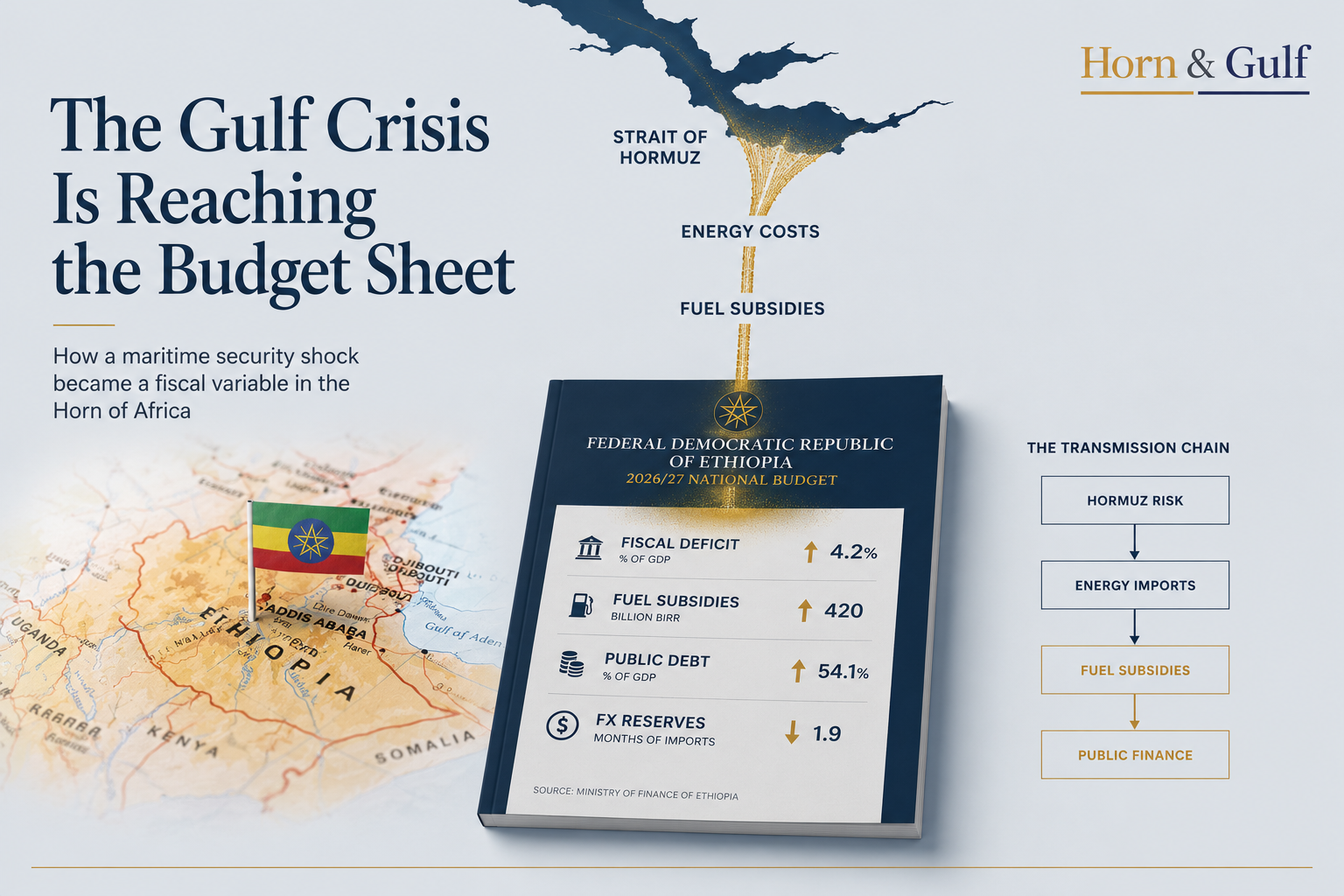
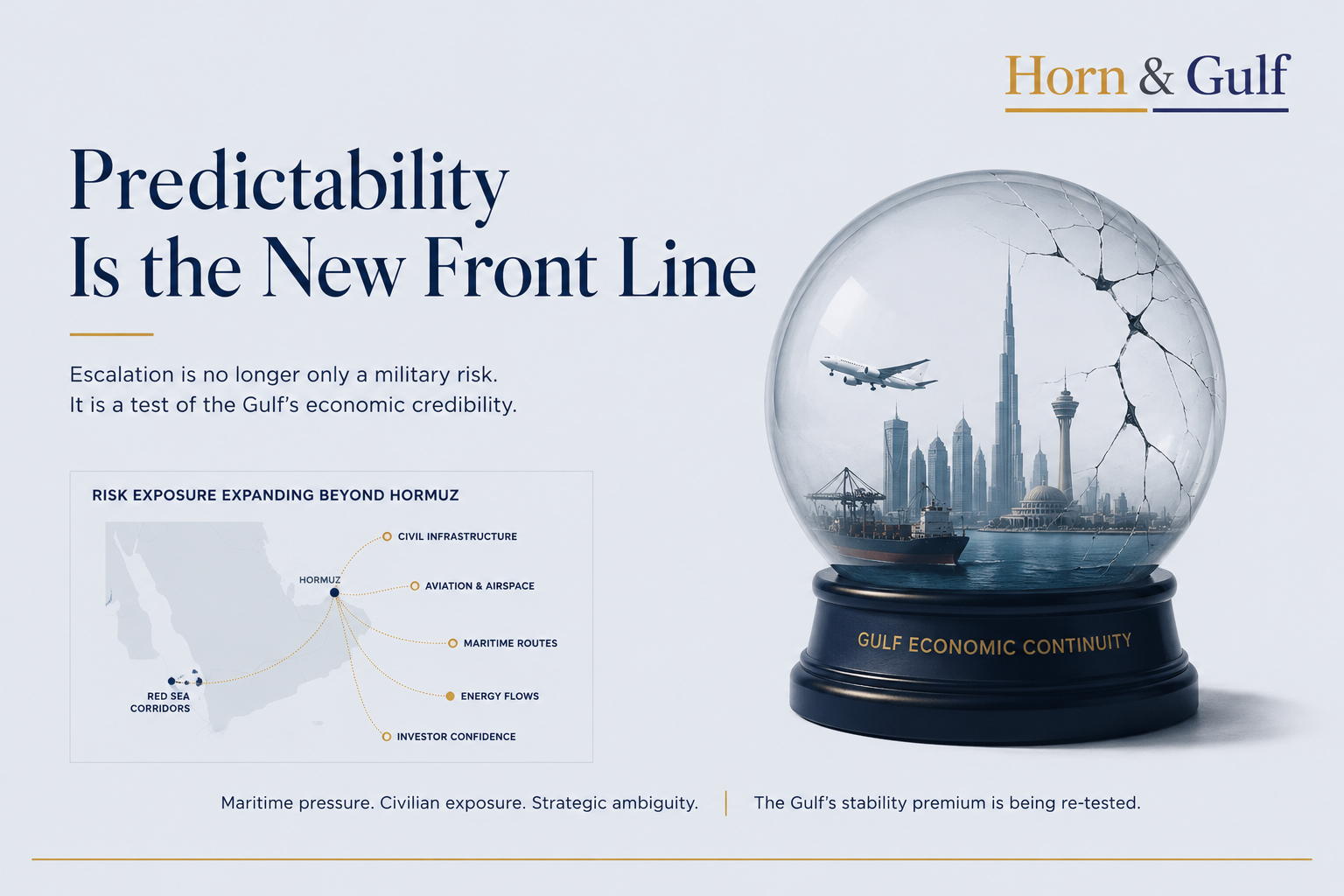
Gulf Escalation Tests the Region’s Economic Predictability
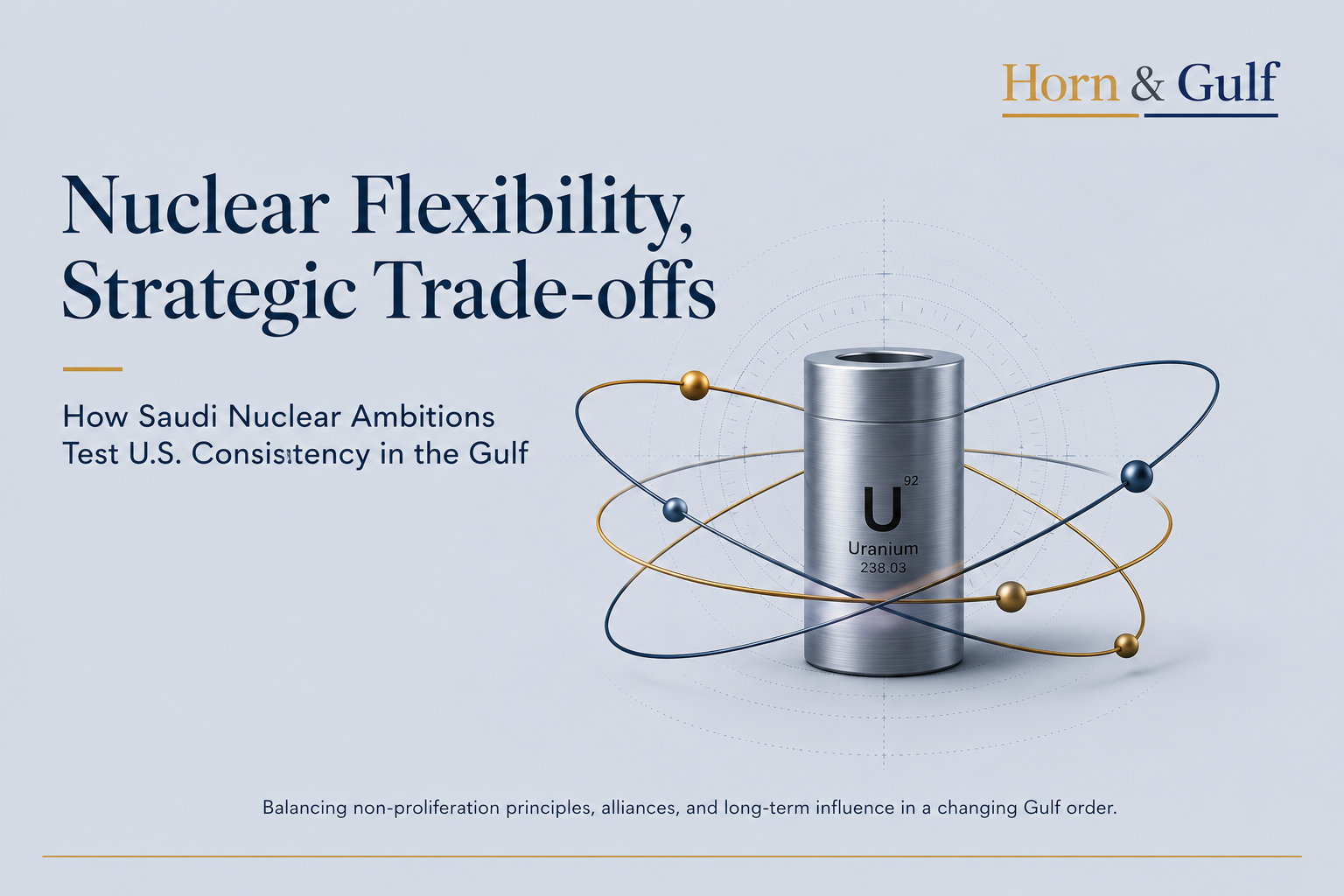
Saudi Nuclear Enrichment and the Limits of U.S. Consistency in the Gulf
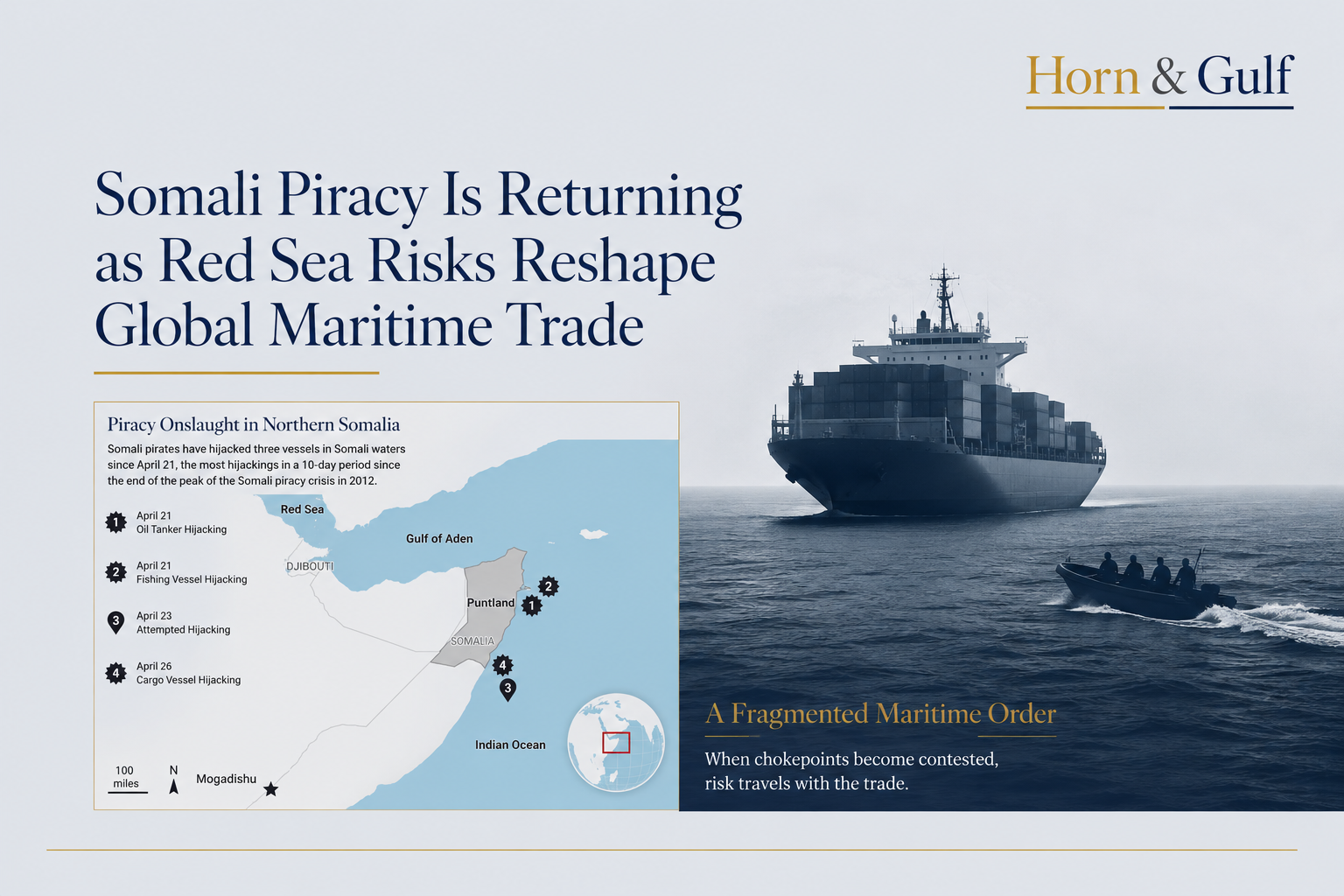
Somali Piracy Is Returning as Red Sea Shipping Risks Reshape Global Trade
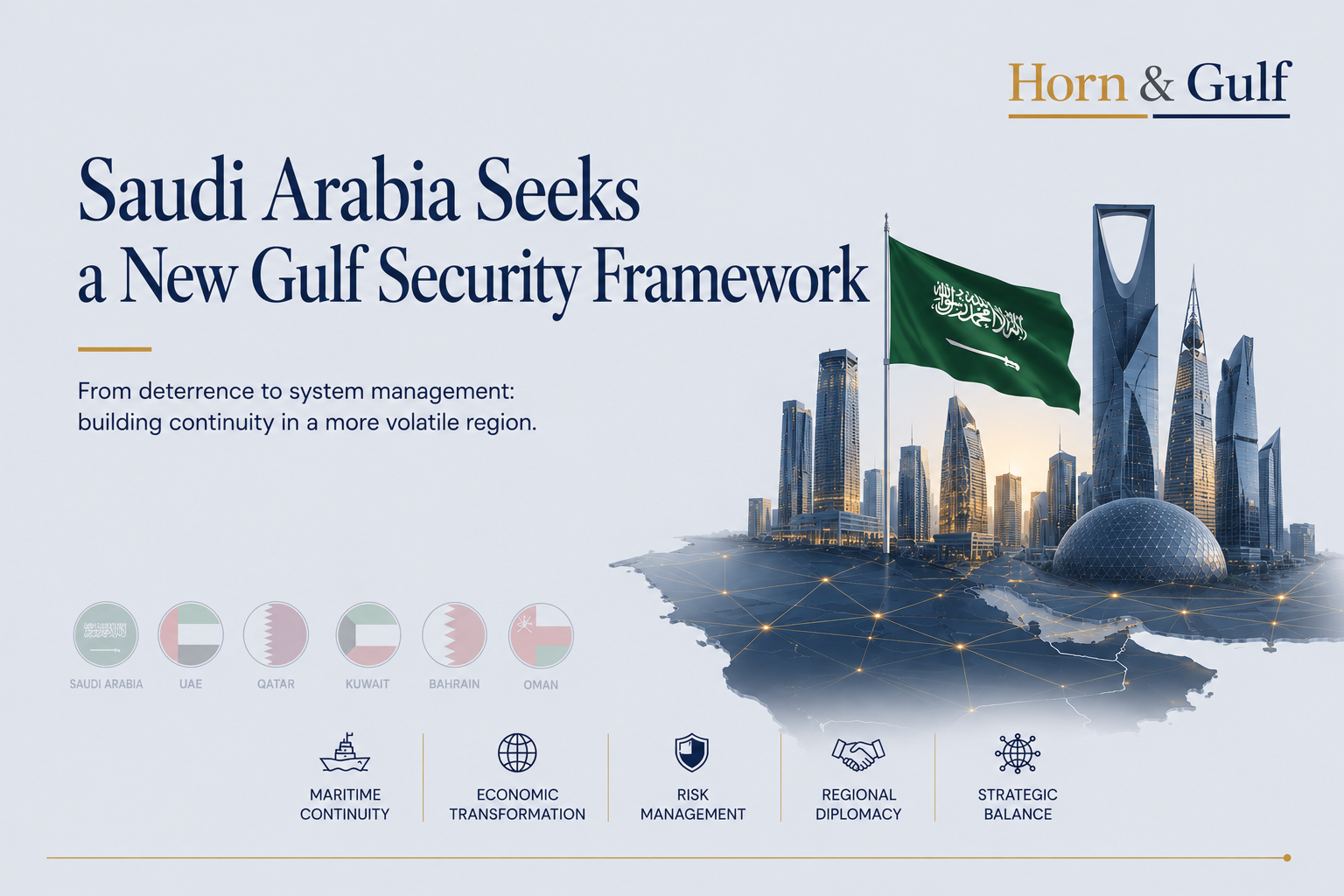
Saudi Arabia Is Seeking a More Sustainable Gulf Security Framework
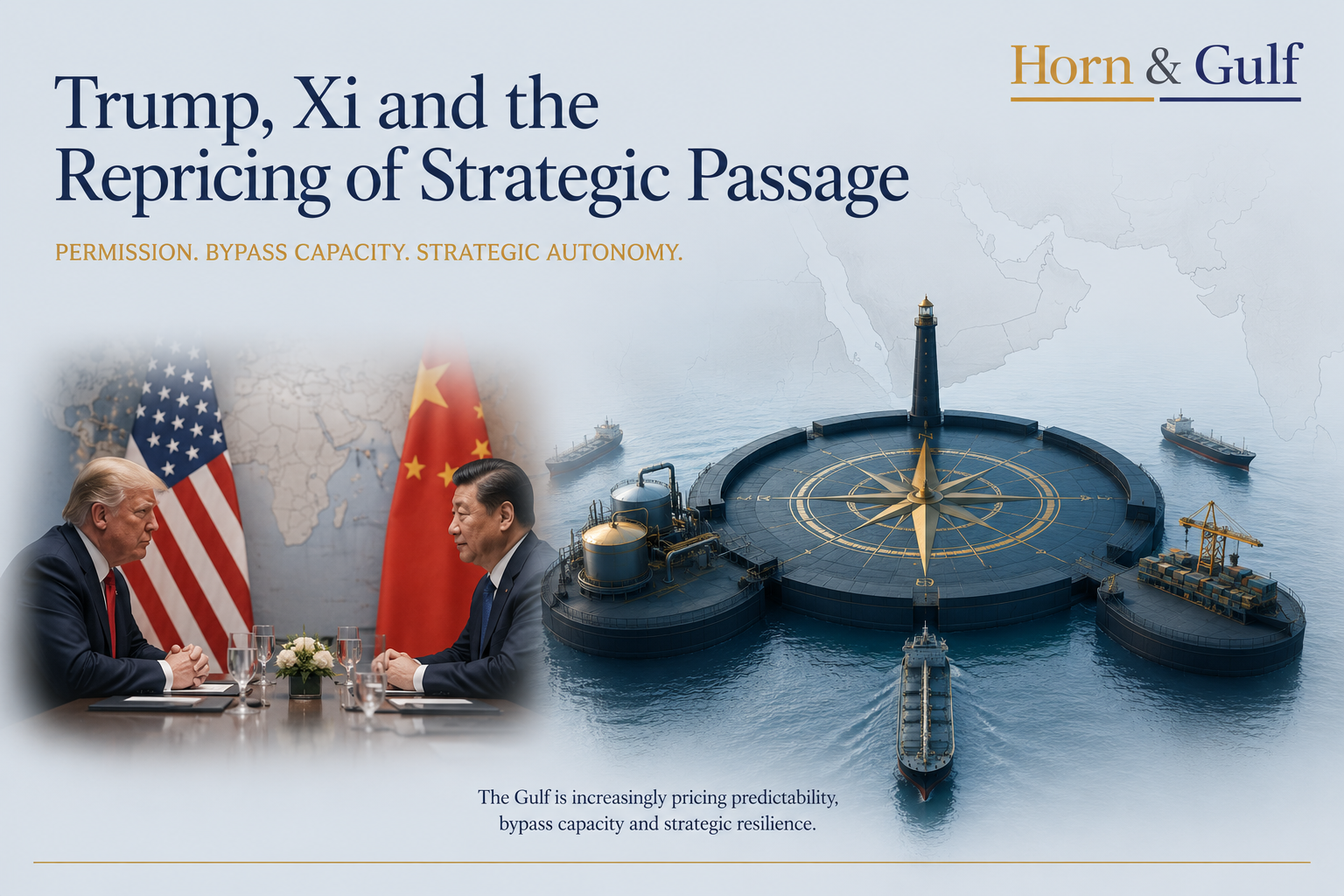
Trump, Xi and the Repricing of Strategic Passage
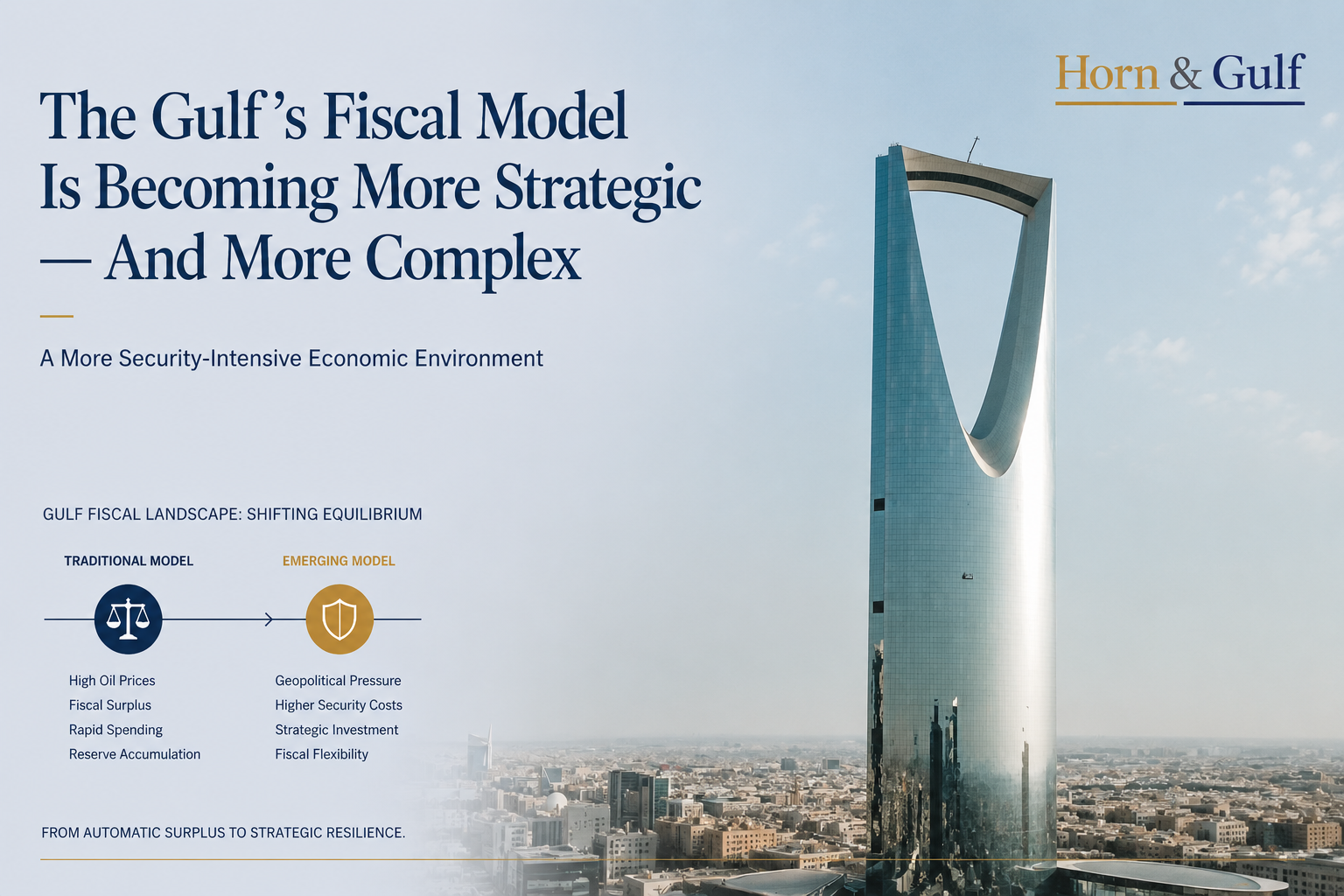
The Gulf’s Fiscal Model Is Becoming More Strategic and Complex
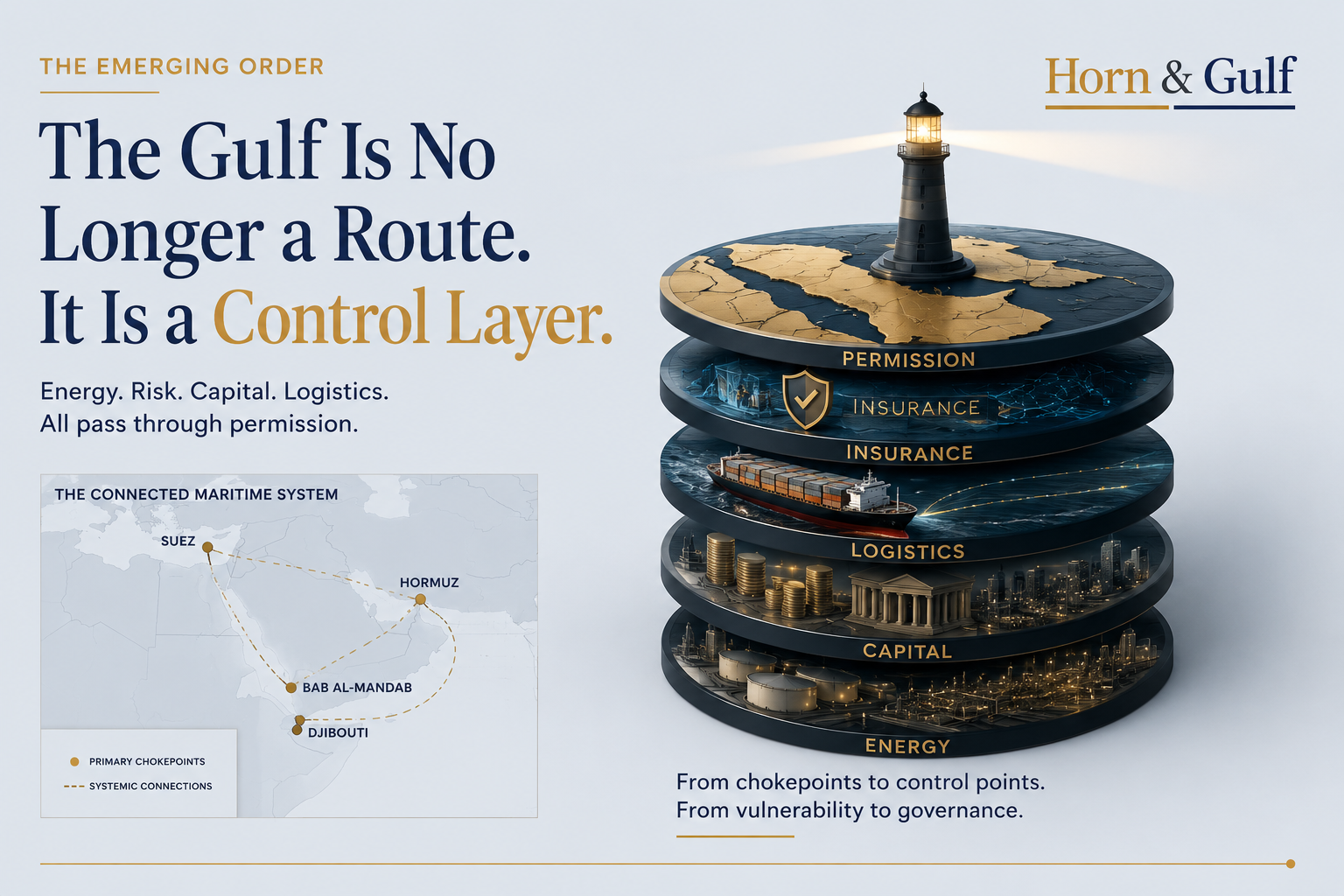
The Iran War Is Repricing the Gulf as a Systemic Control Layer
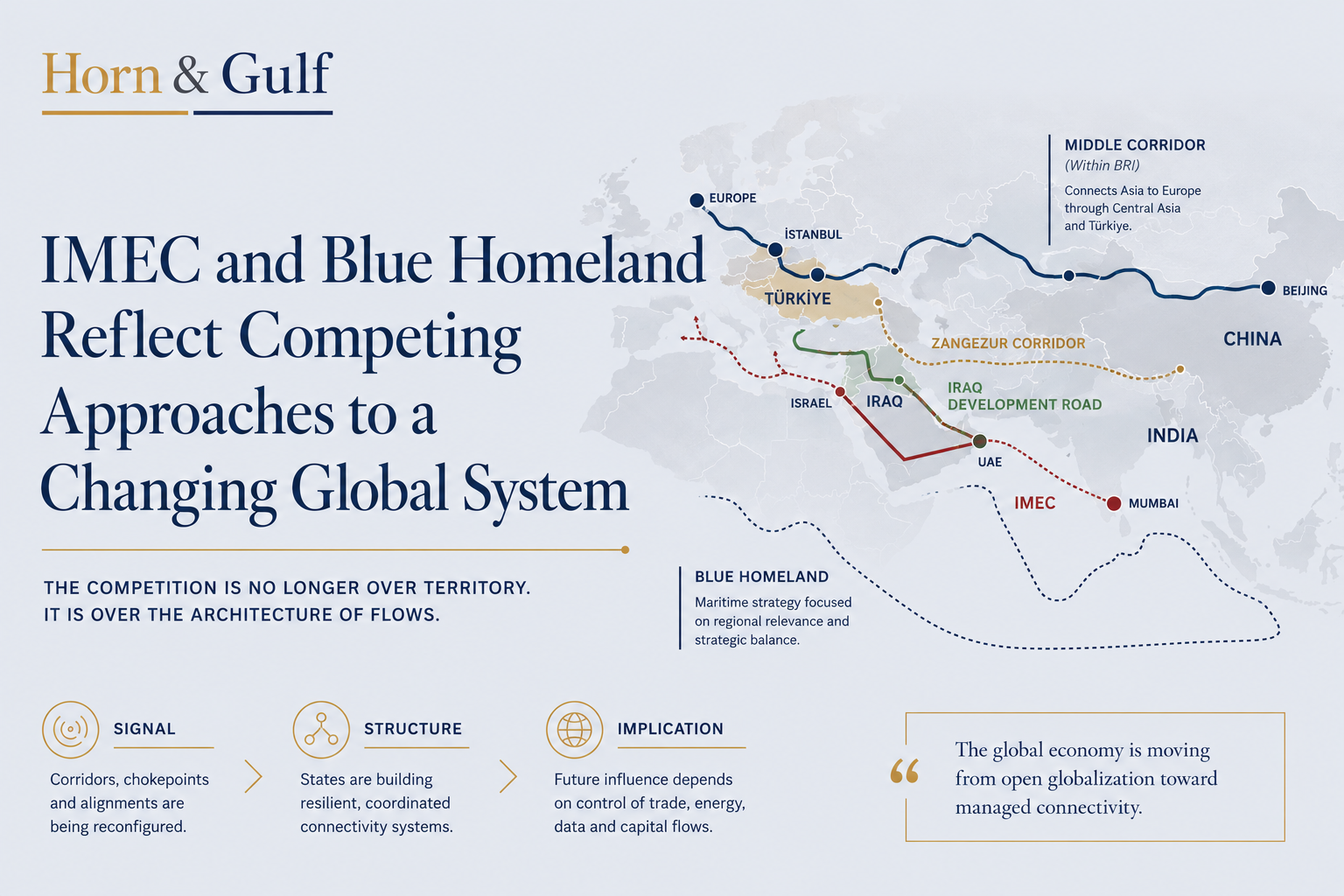
IMEC and Blue Homeland:
Two Corridors one Objective
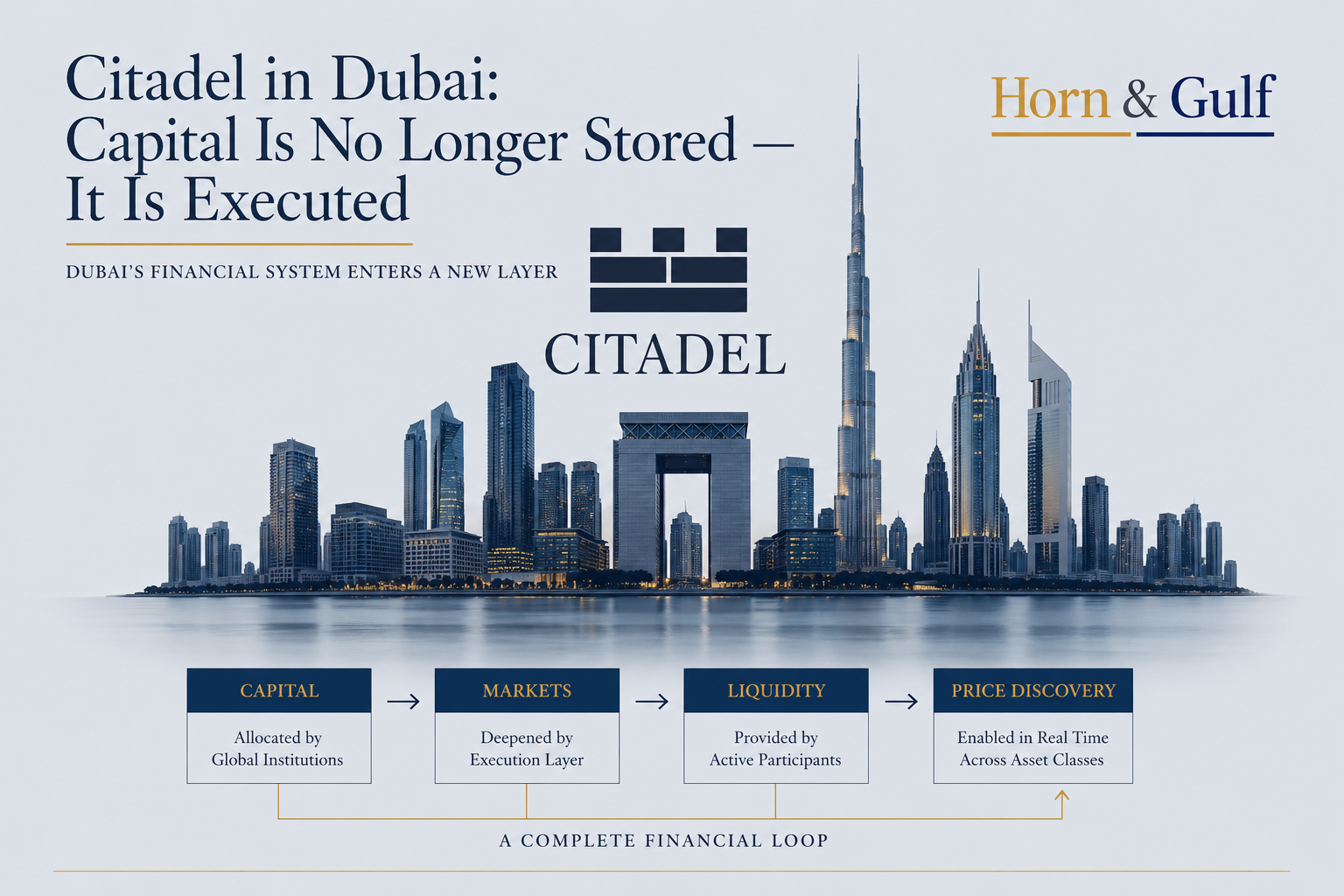
Citadel in Dubai: Capital Is No Longer Stored It Is Executed
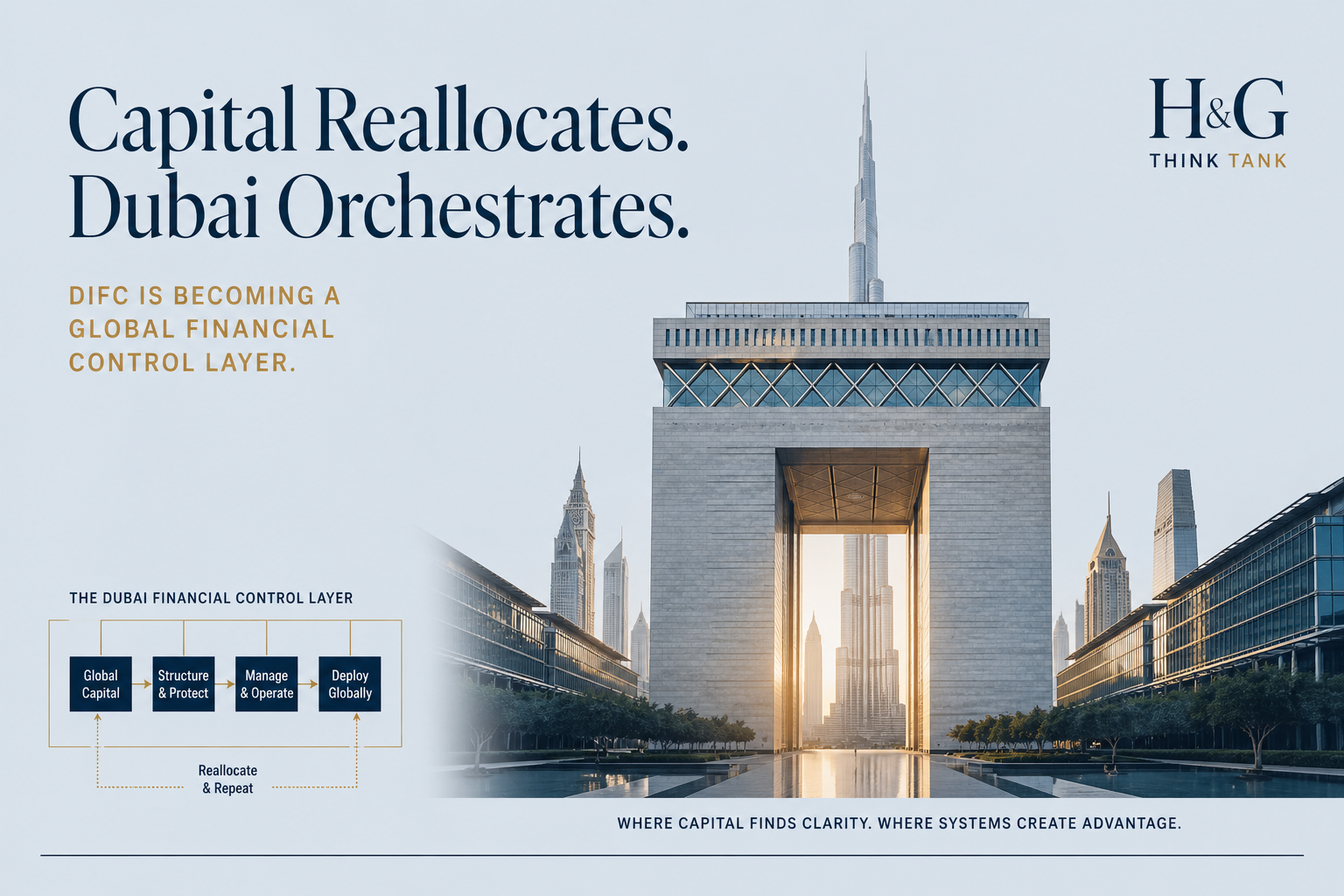
How Dubai Is Becoming a Global Financial Control Layer
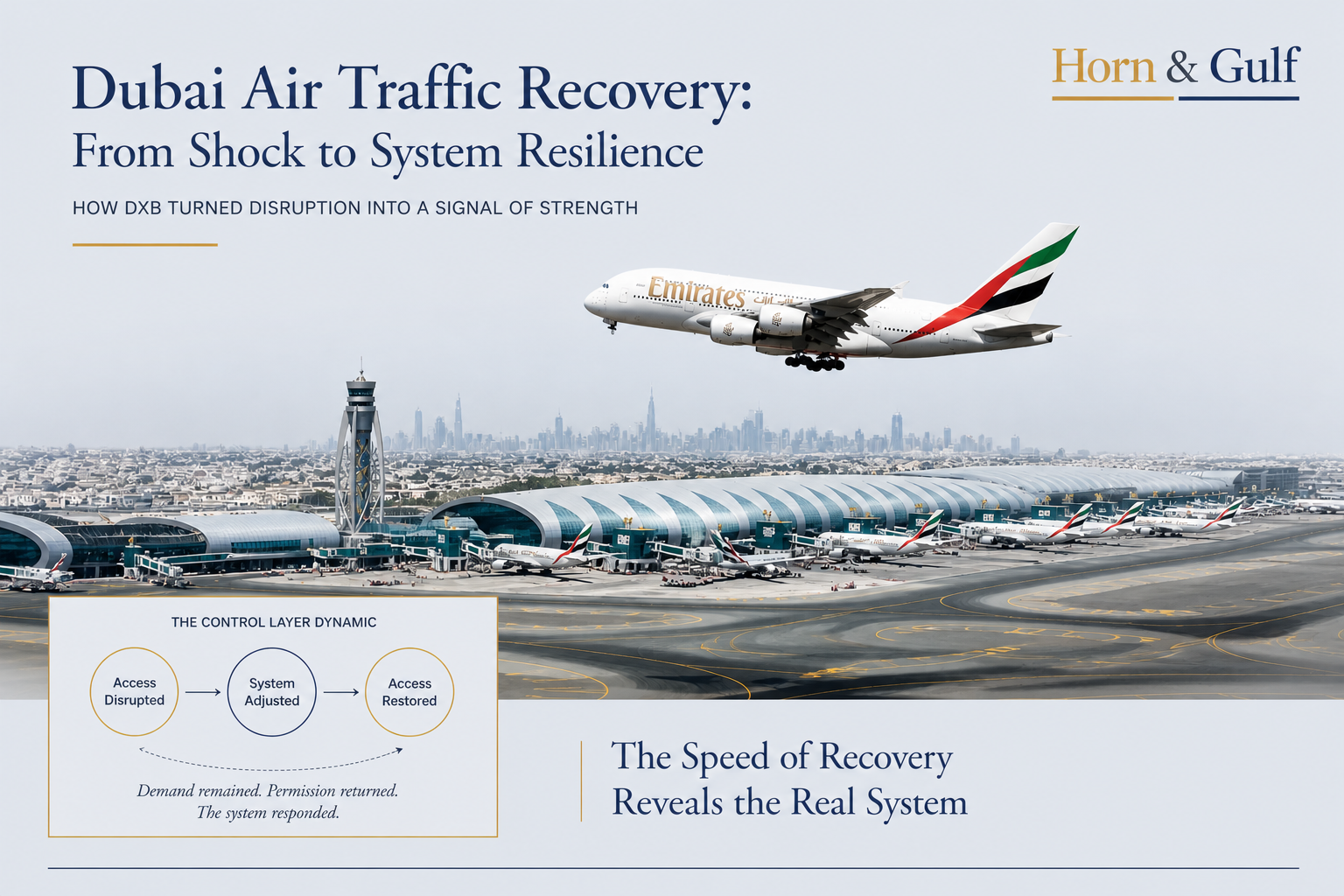
How a 66% Collapse Turned Into a System Resilience
Where Finance Meets Infrastructure
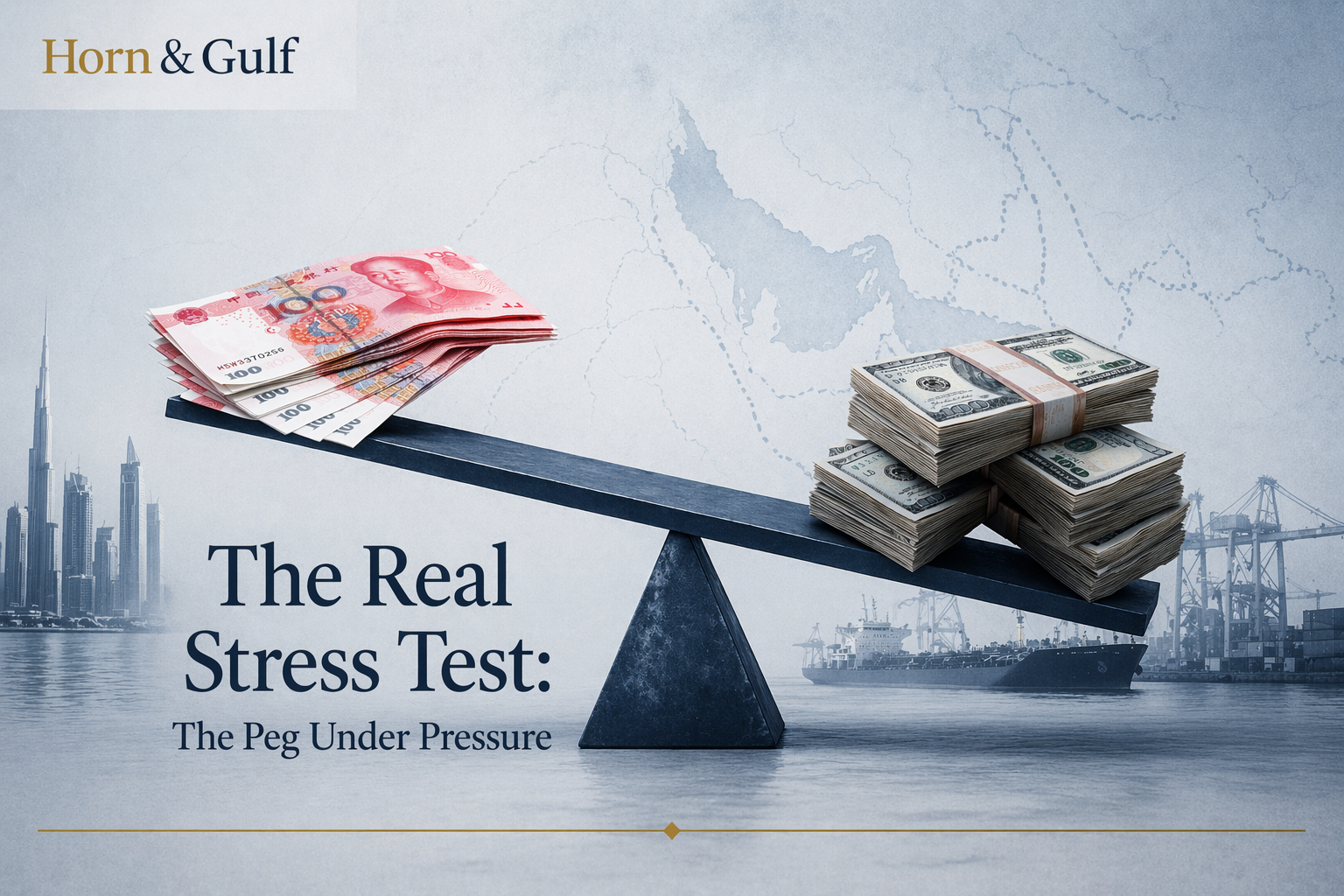
The Real Stress Test : The Peg under Pressure
How Middle East Capital Is Repricing Risk During Conflict
REIT performance in Q1 2026 is more than a property market update
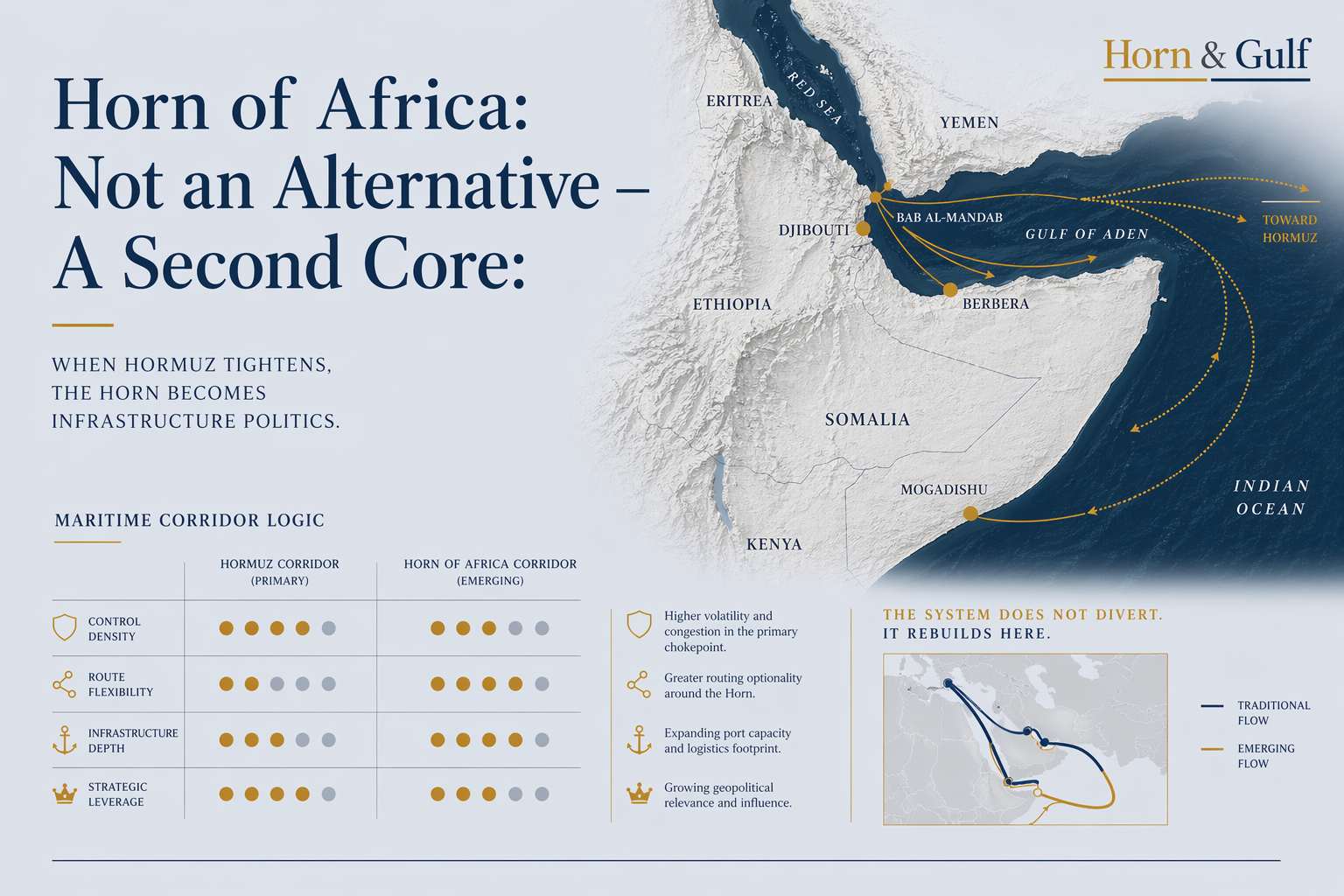
Horn of Africa: The Other Side of Hormuz
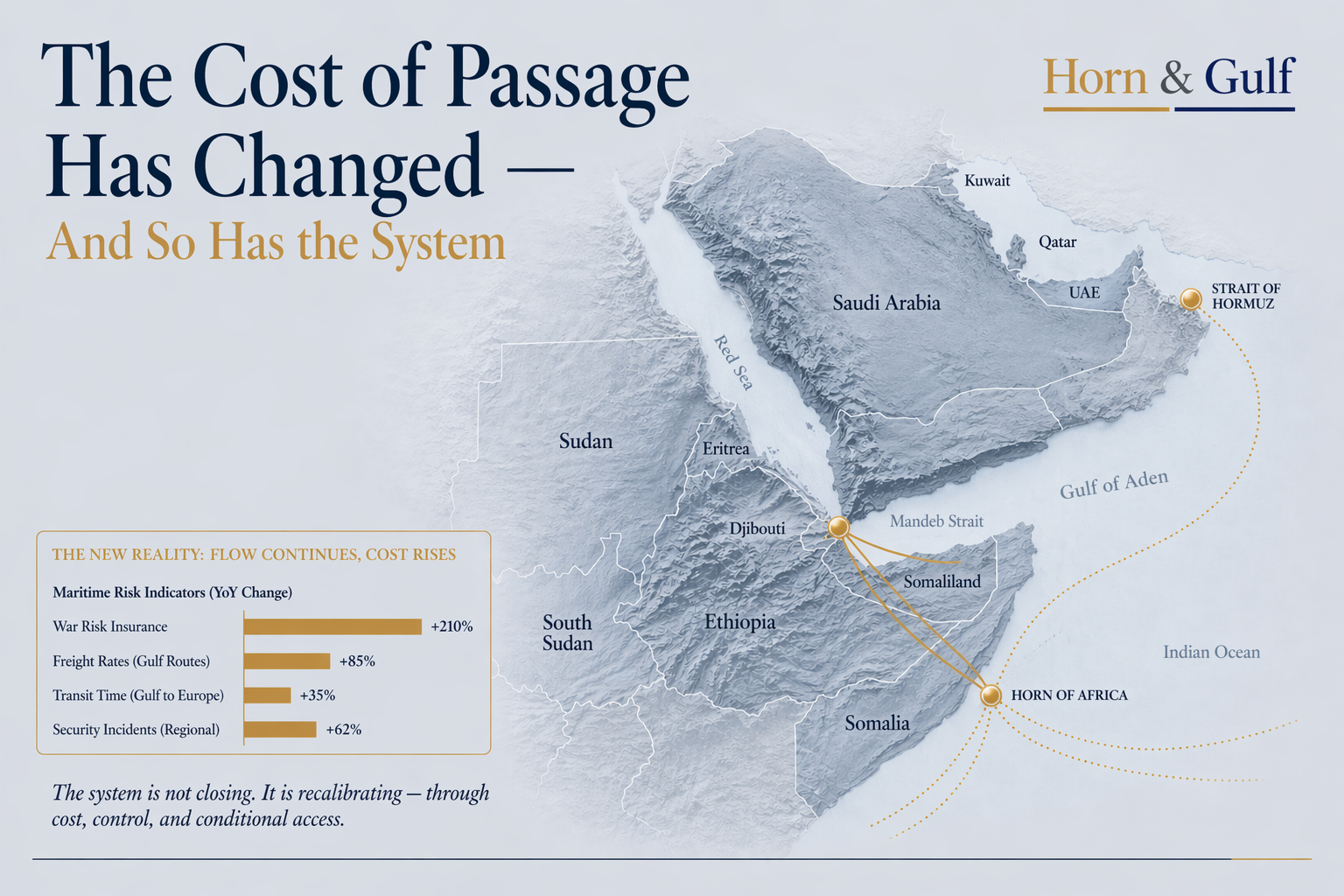
The Cost of Passage Has Changed And So Has the System
The Gulf Pays the Cost, Others Shape the Game
From Financial Hub to Execution Layer
Finance Is No Longer Digital. It Is Becoming Native.

US Escort Plan in the Hormuz Signals Market Fragility
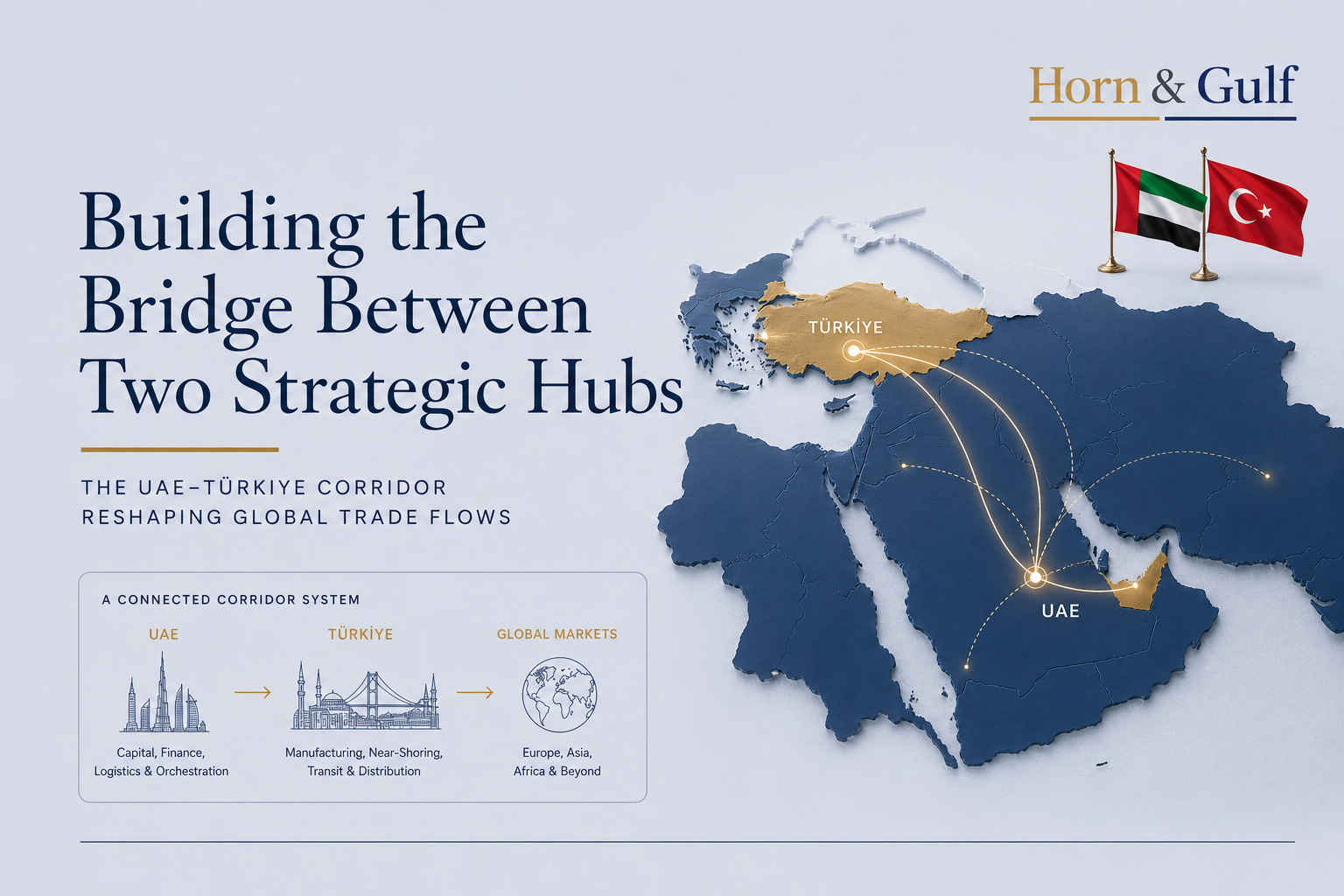
Redesigning Trade Routes Between the Gulf and Europe
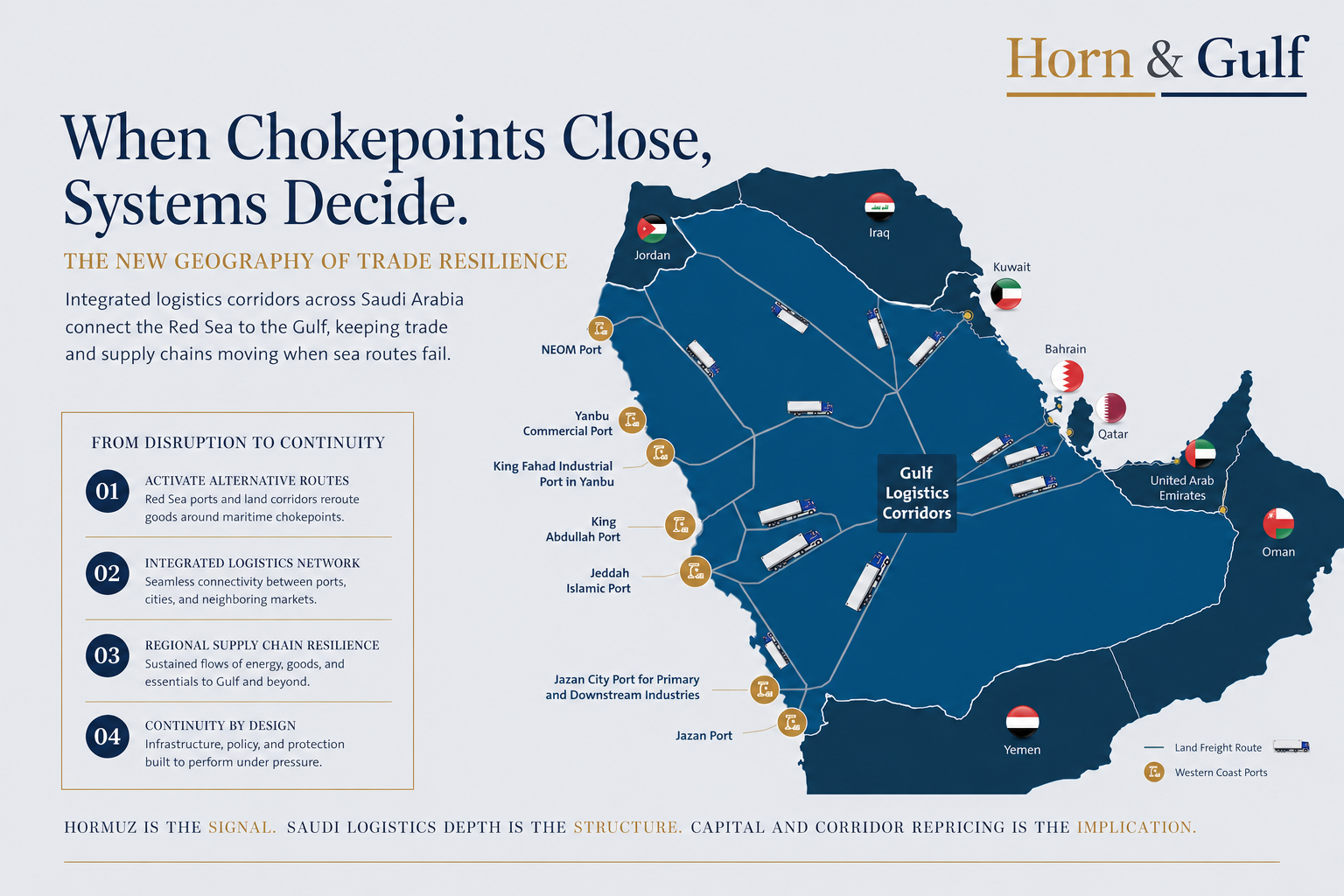
How Saudi Logistics Depth Reshapes Gulf Supply Chains
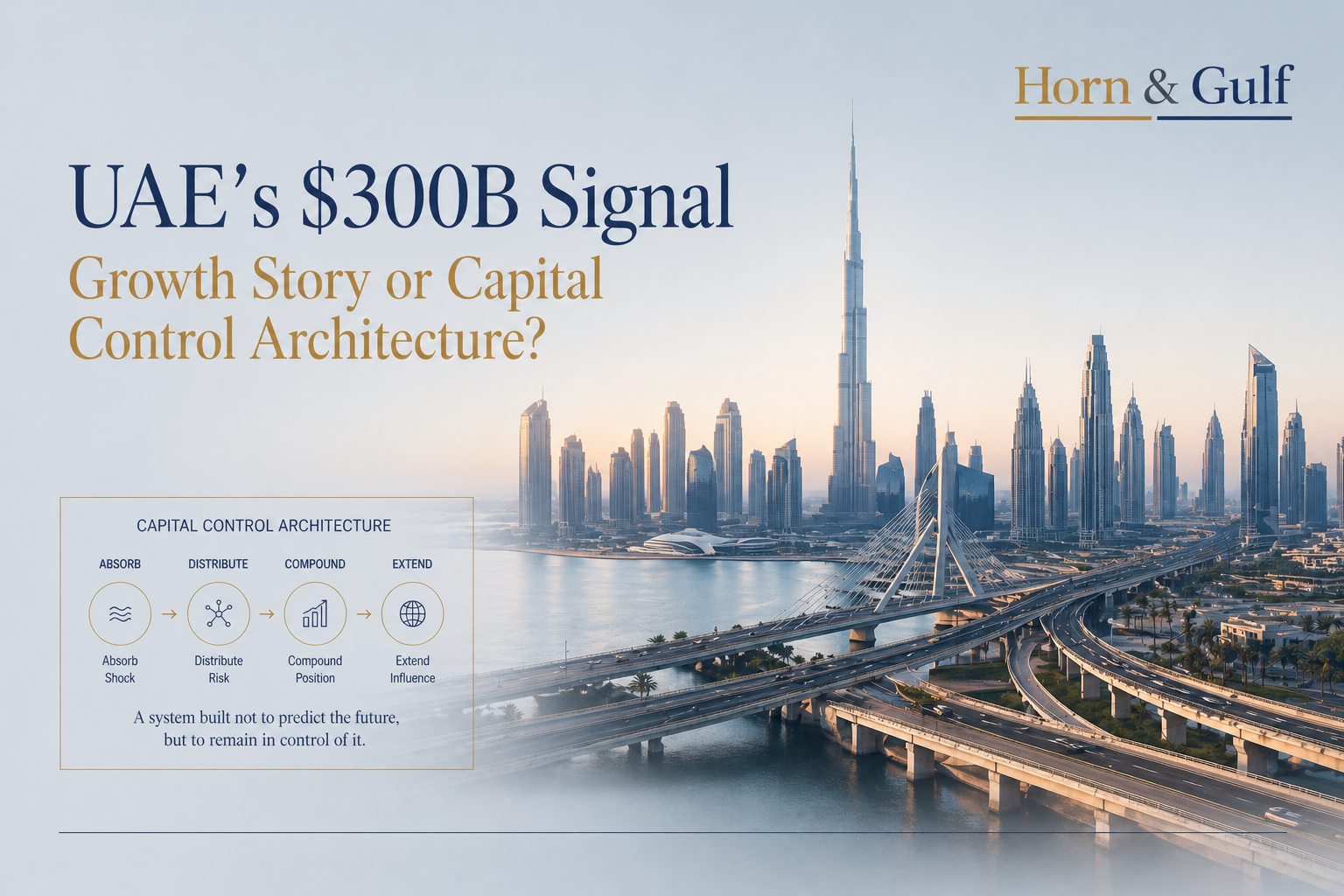
UAE $300B Projects Signal: Growth Momentum or Control Architecture?
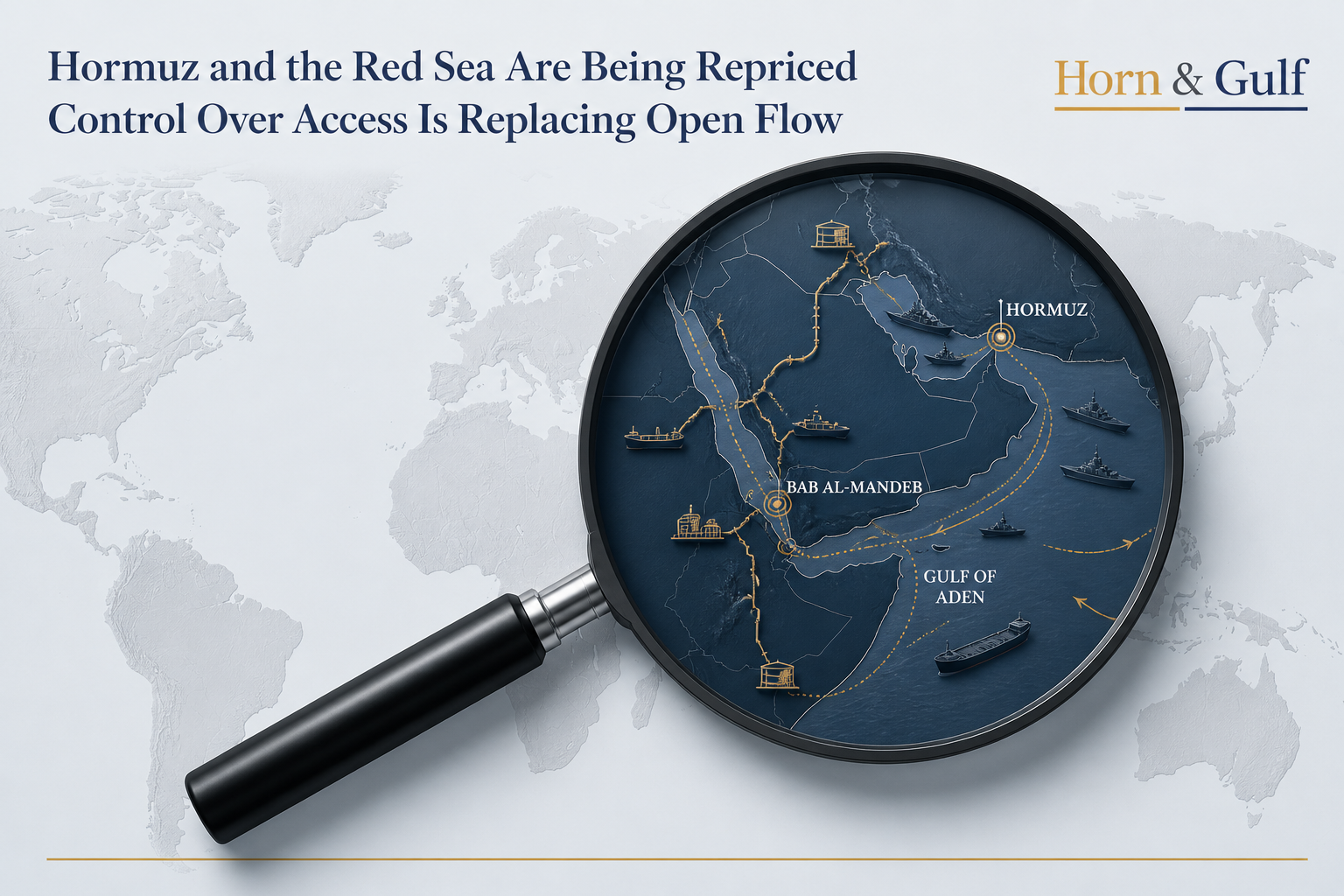
Hormuz is Shifting from a Trade Route into a Permissions Regime
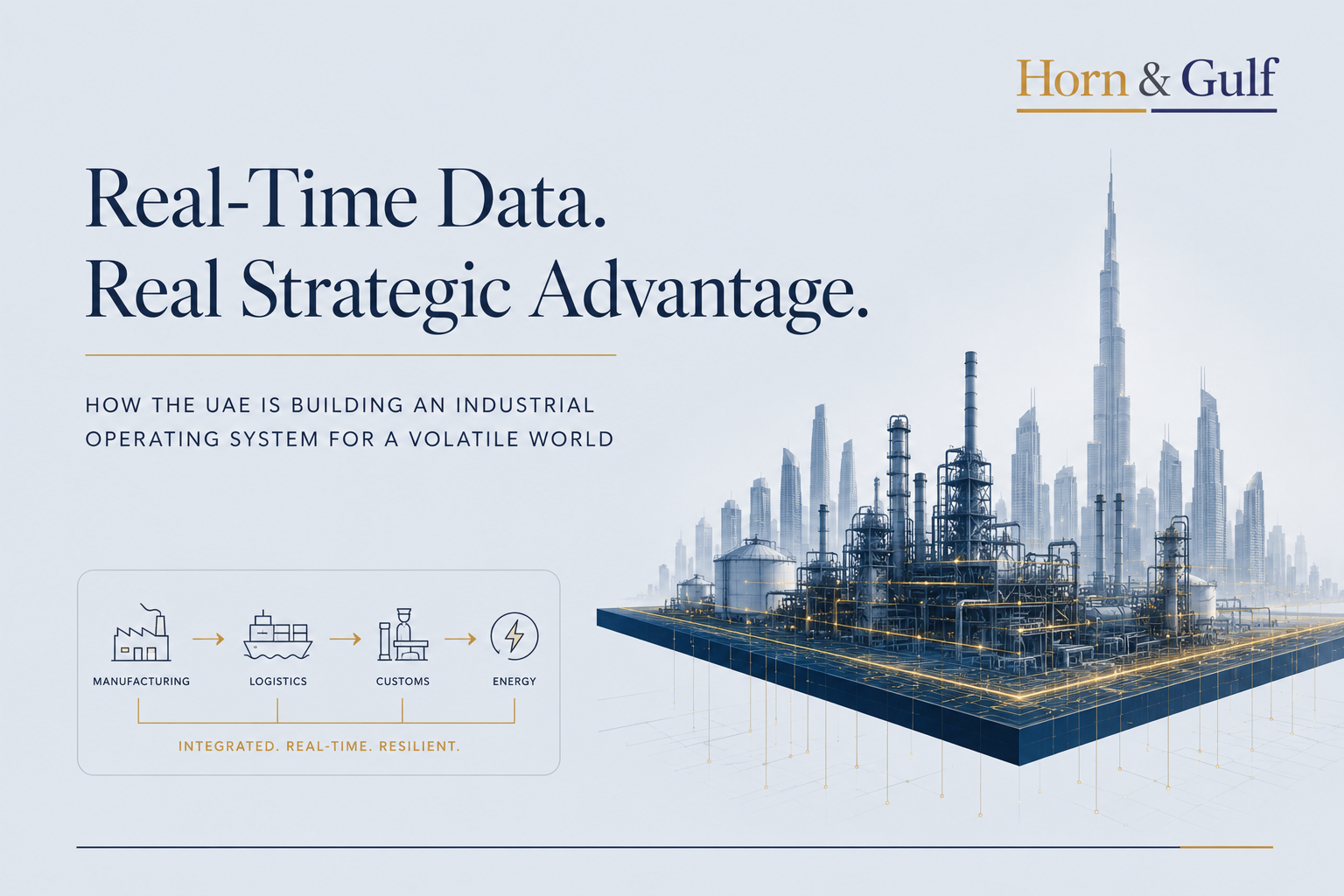
How Real-Time Data Is Becoming a National Resilience Tool