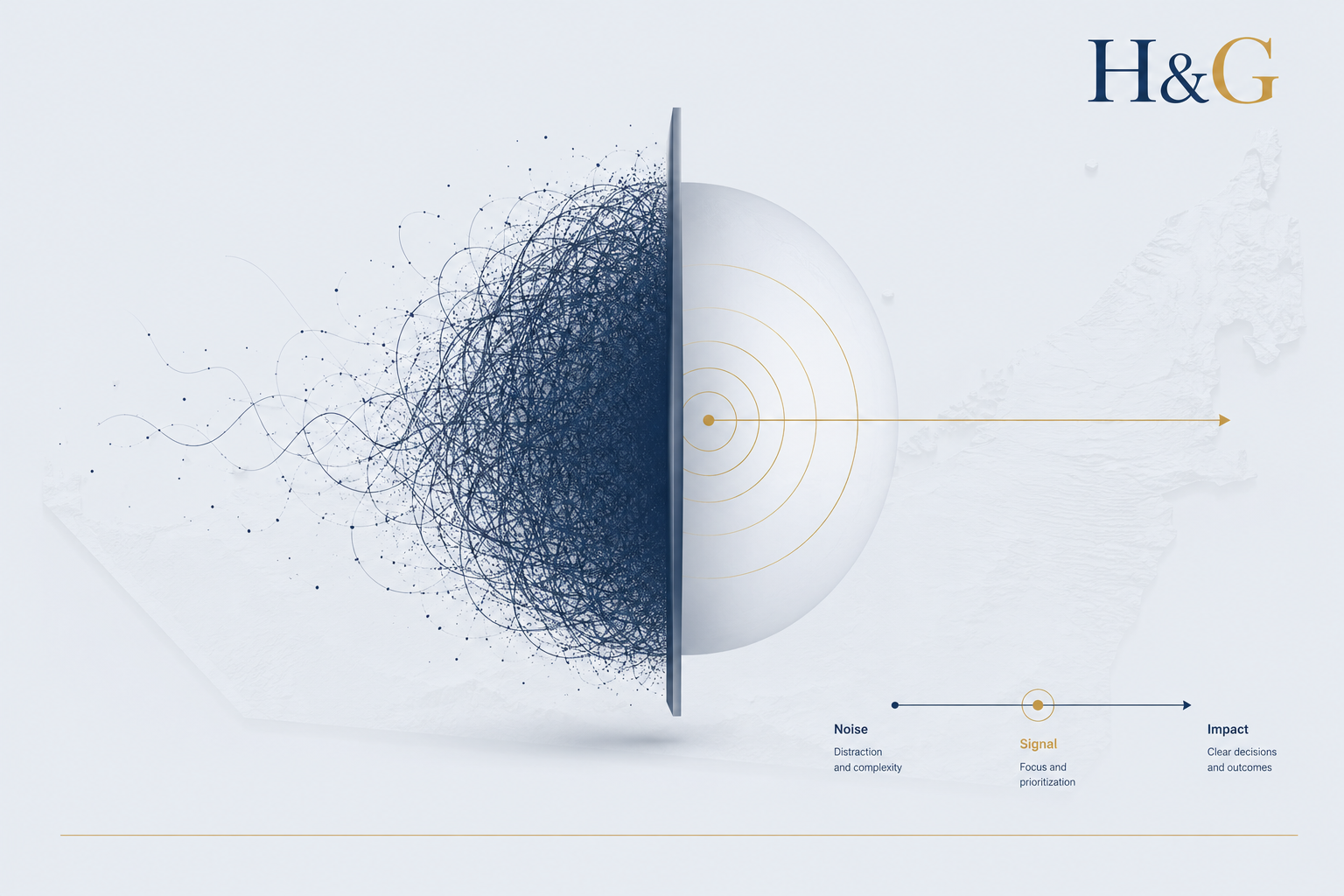
This section brings together our latest insights across maritime security, political dynamics, trade flows and strategic risk — connecting events across the Red Sea, the Horn of Africa and the Gulf into a single analytical framework.
The SOX Signal: Why a Semiconductor Rally Is Actually an Infrastructure Story
The 18-day semiconductor rally is not just a market anomaly. It signals a deeper shift in global capital allocation — from technology narratives to physical infrastructure. As AI demand accelerates, the real story lies in where compute, energy, and capital converge.
From Acute Shock to Chronic Friction
From Acute Shock to Chronic Friction: How the Gulf Is Restarting Oil Flows After Hormuz Disruption. Qatar tests exports, UAE restarts infrastructure, Kuwait waits. Oil flows are returning, but trust isn’t.
Chokepoints, Power, and Risk: The Real Meaning of an Iran Blockade
A naval blockade of Iran is often presented as a clean economic mechanism: cut off oil revenues, restrict foreign currency inflows, trigger a currency collapse, drive inflation, and force the regime to the negotiating table.
Dubai didn’t panic. It revealed something deeper
During the recent Gulf tensions, I noticed something that stayed with me. People here were not primarily afraid of drones, missiles, or war itself. They were uneasy about something else.
UAE: Why It Represents the New Model of Belonging in the 21st Century
For over two centuries, the dominant political question was simple: “Which nation do you belong to?”
Most people look at Dubai and see architecture.
They see iconic buildings, futuristic rooms, record-breaking projects.
But they miss the strategy behind it.
Is This Dubai’s First Real Stress Test?
While geopolitical tensions in the region primarily involve state actors elsewhere, much of the commentary—especially across social media—has gravitated toward Dubai.
JAFZA’s New Logistics Facility Is Not About Capacity — It Is About Control
At first glance, the newly announced vehicle logistics center in JAFZA looks like a standard expansion: one million square feet, capacity for 6,500 vehicles, operations starting in May 2026.
AI is Becoming Administrative Infrastructure
Dubai is doing something structurally different. It is embedding AI into: Decision workflows, Administrative processes, Service delivery systems. This is not digitization. It is operational re-architecture.
Red Sea and Global Trade Disruption 2.0: Not a Shock A System Shift
The Red Sea is not breaking down under pressure. It is being redefined under competition.
Iran–Israel Shadow Escalation: Deterrence Still Holds But With Shrinking Margins
For years, the tension between Iran and Israel has been described as a shadow war — contained, indirect, and carefully managed below the threshold of open conflict.
Finance Is No Longer Digital. It Is Becoming Native.
DIFC’s shift to an AI-native financial centre marks a deeper transformation: risk is priced in real time, capital becomes selective, and stability is engineered—not assumed.
The Gulf Pays the Cost, Others Shape the Game
The Strait is not closed. It is being controlled. As global powers shape the conflict, the Gulf absorbs the cost—through higher risk, slower flows, and a permanently repriced system.
Hormuz Is Not a Chokepoint. It Is a Compression Point
Hormuz and Taiwan reveal the same structural truth: modern crises don’t break supply — they break timing. The real risk is not shortage, but system misalignment across global flows.
The Gulf Is Not Defending Chokepoints. It Is Building Corridors
Yemen is no longer just a conflict zone — it is a maritime control node. The Gulf’s strategy is shifting from territorial control to flow orchestration across the Red Sea and Horn of Africa.
The System Is Learning How to Operate Under Stress
The war may end, but the system doesn’t stabilize. In the Gulf, risk persists, costs rise, and capital adapts. This is not crisis — it is managed instability.
The Cost of Passage Has Changed — And So Has the System
Maritime flow in the Gulf is not stopping — it is being reshaped. From Hormuz to the Horn of Africa, access now comes with cost, control and embedded risk. This is not disruption. It is a new system
Hormuz Strait Closure Impact on Global Trade: How Saudi Logistics Depth Reshapes Gulf Supply Chains
Hormuz Strait disruption impact is no longer a short-term shock. It is actively reshaping Gulf trade routes, logistics systems and capital flows.
As maritime chokepoints fail, supply chains are shifting toward inland corridors and multi-route resilience structures.
UAE Leaving OPEC: A Shift from Collective Oil Control to Independent Energy Strategy
How UAE leaving OPEC reshapes oil markets, weakens cartel coordination and shifts global energy power dynamics across the Gulf system.
Yemen Is Becoming the Gulf’s Control Layer Between Hormuz and the Red Sea
Yemen red sea control layer dynamics are no longer theoretical. Yemen is becoming the strategic hinge between Hormuz and the Red Sea, reshaping Gulf rivalry, maritime logistics and global trade flows.
UAE–Türkiye CEPA: Redesigning Trade Routes Between the Gulf and Europe
UAE–Türkiye trade corridor is no longer just a bilateral agreement. It is reshaping global trade routes by creating a multi-layered system connecting Europe, Africa and Asia through new logistics and production networks.
US–Gulf Oil Security Collapse and Hormuz Disruption: From Supply Guarantee to Flow Control
Hormuz Strait flow control is no longer a temporary disruption. It is reshaping the Gulf energy system by shifting pricing from supply security to route access and risk.
Somali Piracy Is Returning as Red Sea Shipping Risks Reshape Global Maritime Trade
Somali piracy risk is returning as Red Sea shipping routes face rising pressure. The issue is no longer isolated piracy, but a wider maritime risk system linking the Gulf, Red Sea and Horn of Africa.
The UAE’s Hidden Oil Shipments Show Hormuz Is Becoming a Shadow Logistics System
UAE crude export logistics are entering a new phase as rising Hormuz risk forces Gulf energy trade to adapt. Recent shipping patterns suggest the UAE is increasingly relying on alternative routing, storage integration and lower-visibility maritime operations to maintain export continuity under regional pressure.
The Gulf Is Not Winning the AI Race — It Is Becoming the Infrastructure Beneath It
Gulf AI infrastructure is becoming increasingly important as artificial intelligence shifts from a software industry toward a physical infrastructure system.
Saudi–UAE Competition and the Repricing of Gulf Power
The visible signal is growing strategic divergence between Riyadh and Abu Dhabi. The deeper structural reality is the gradual evolution of the Gulf into a more multi-centre geopolitical system.
Saudi Arabia Budget Deficit: The Gulf’s Shift Toward Strategic Capital Deployment
Saudi Arabia’s fiscal transition reflects a broader Gulf shift toward resilience, infrastructure investment and strategic capital deployment.
The Iran War Is Repricing the Gulf as a Systemic Control Layer
Indicative framework showing how escalation around Hormuz may cascade across interconnected market and infrastructure systems.
Trump, Xi and the Gulf’s New Maritime Logic
The Gulf is no longer pricing war alone. As Hormuz risk evolves, markets, logistics systems and Gulf states are increasingly prioritizing bypass capacity, maritime resilience and strategic continuity.
Saudi Arabia Is Seeking a More Sustainable Gulf Security Framework
Saudi Arabia’s evolving Gulf security posture increasingly reflects continuity management across maritime, economic and regional systems.
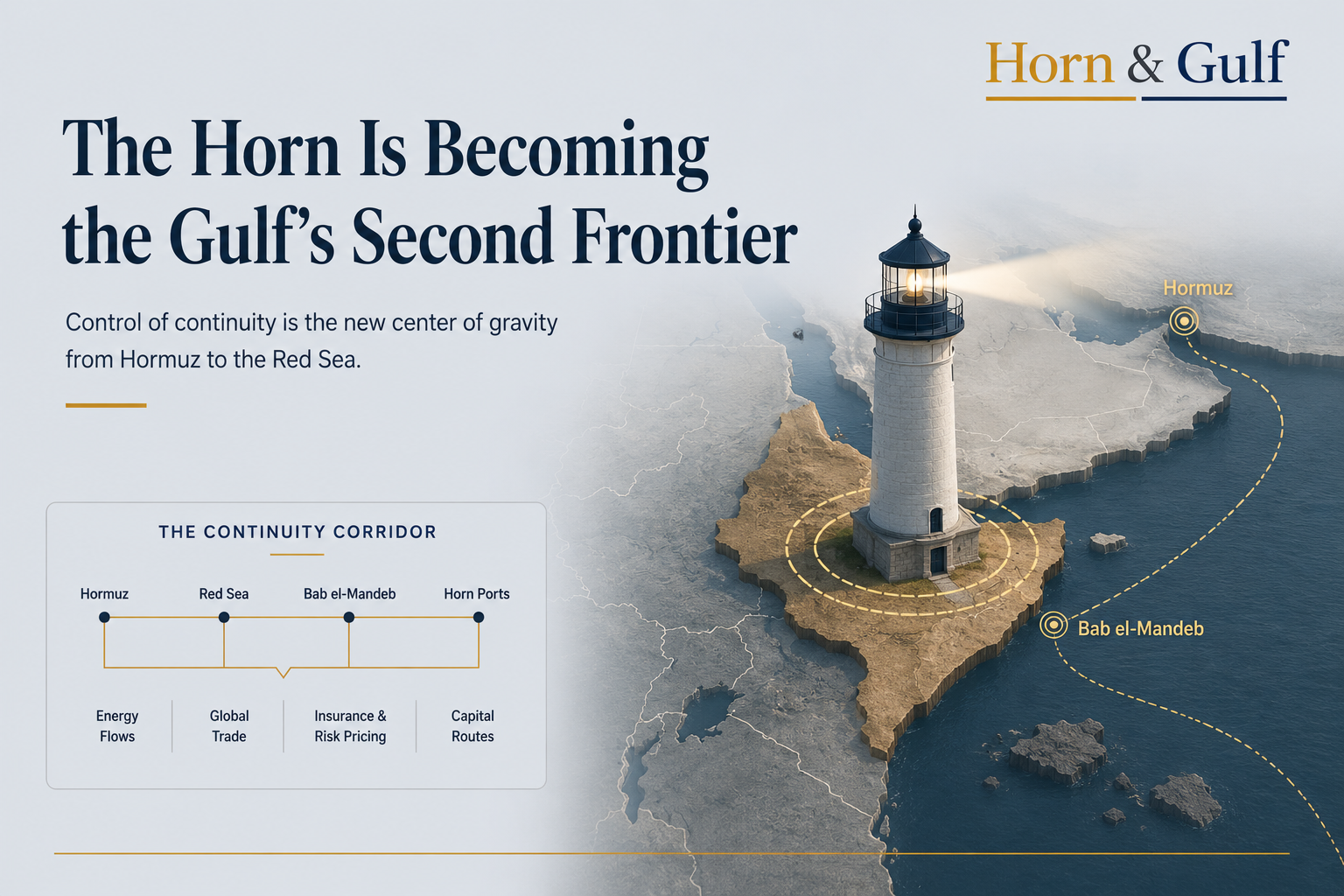
The Horn Is Becoming Part of the Gulf’s Continuity Equation
The Horn of Africa is becoming increasingly connected to Gulf trade continuity and Red Sea security calculations.
Sharjah–Oman and the Gradual Rewiring of Post-Hormuz Trade
The Gulf is gradually building distributed trade continuity systems across Oman, Fujairah and Red Sea corridors.
The Gulf Is Building Around Hormuz But the Strait Still Cannot Be Replaced
The Gulf is expanding pipelines, ports and logistics systems to reduce single-route dependence on Hormuz.
The Strait Is Open But the Benchmark Is Under Pressure
Hormuz disruption is increasingly affecting pricing systems, insurance markets and benchmark confidence across maritime trade.
Fujairah Is No Longer a Port Expansion Story It Is a Gulf Continuity Strategy
Fujairah’s eastern positioning is increasingly reshaping Gulf continuity and maritime resilience calculations.
Saudi De-Escalation Was Never Only Diplomacy
Hormuz disruption is increasingly testing the continuity assumptions behind Vision 2030.
The Gulf’s Emerging Security Divergence
Gulf security divergence is becoming more visible as regional states respond differently to the same escalation environment.
Hormuz Is Now Influencing the Refined Fuel Economy, Not Only Crude Oil
Hormuz-related disruption is increasingly affecting aviation fuel, gasoline and downstream mobility systems.
Somalia’s Mogadishu Crisis Tests Competing Approaches to State-Building
The immediate clashes may prove temporary, but they have revived a longer-term debate about how political stability is built and sustained in Somalia.
Hormuz Tensions Expose Supply Risks Beyond Oil and LNG
The Strait of Hormuz remains a critical maritime corridor for energy exports and industrial supply chains.
Gulf Energy Security Is Shifting From Production Capacity to Deliverability
Production capacity remains critical, but energy security increasingly depends on reliable delivery through contested maritime routes.
THE AGREEMENT IS SIGNED. THE REAL NEGOTIATION HAS JUST BEGUN
The agreement has been signed. The implementation phase now determines whether the framework becomes a functioning settlement.